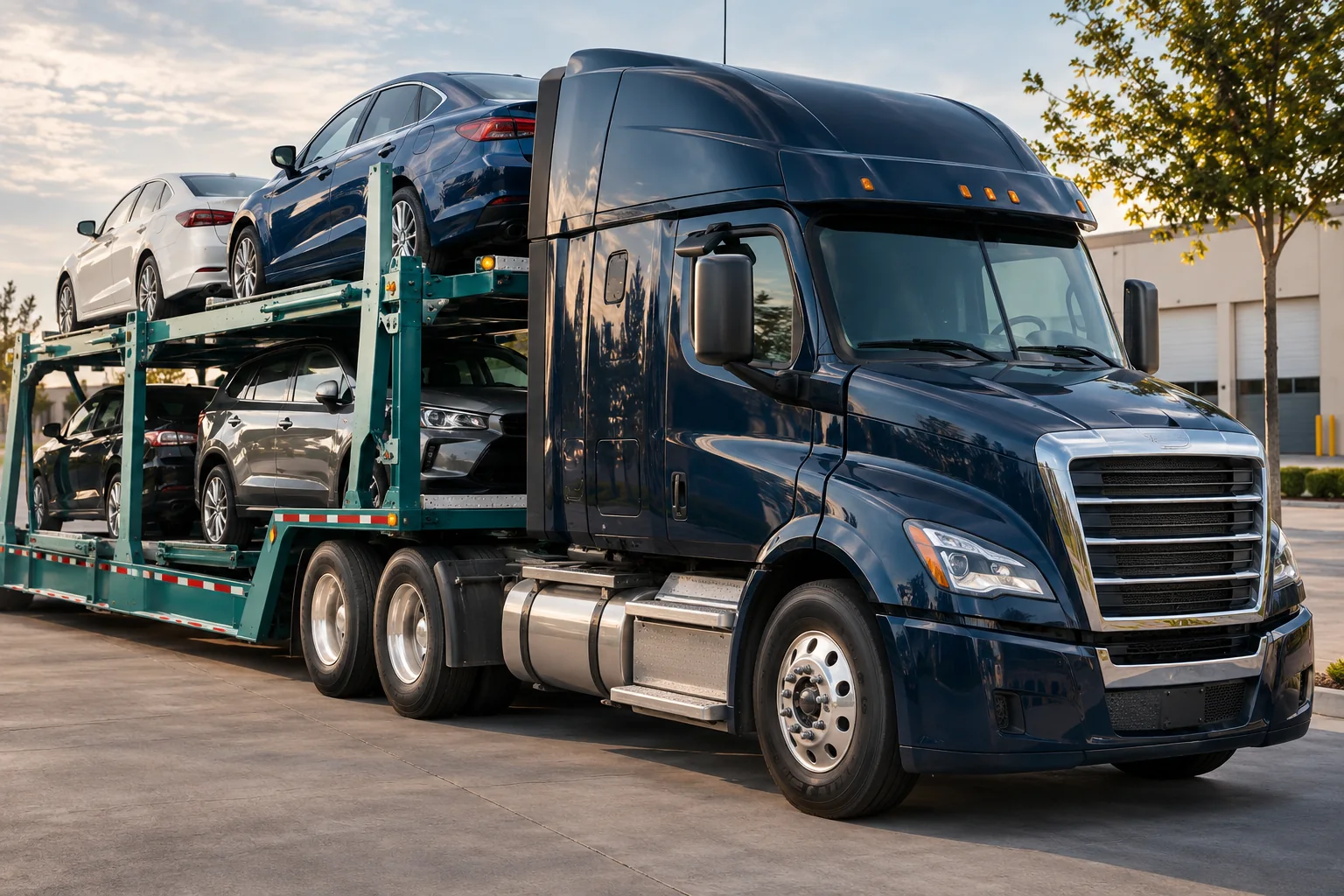
Identify the carrier for this shipment
An auto transport carrier performs the vehicle's physical transportation. The company whose driver loads your car may be different from the business that arranged the booking. FMCSA's automobile transporter advisory distinguishes transporters from brokers, which arrange transportation. Ask for the assigned carrier's legal name and contact information before pickup so you know which business should arrive and which business will control the vehicle during the haul.
Company branding can make this less obvious than it sounds. A trailer may carry a trade name while your paperwork uses the operator's legal name. A driver may be an owner-operator working within a larger business arrangement. You do not need to reconstruct every commercial relationship, but you should receive a clear explanation of the entity accepting your car and the records that identify it. Resolve inconsistent names through your established booking contact.
If you booked directly, ask whether that company will perform the complete trip using its own operation or whether another carrier may handle part of it. If you booked through an intermediary, ask how substitutions are communicated. The guide to car shipping companies explains why a booking brand and a hauling business may occupy different roles. Your file should identify both roles rather than leaving you to infer them from the truck's appearance.
Match the vehicle to the equipment
Equipment suitability begins with an accurate vehicle description. A standard passenger sedan, an oversized pickup, a modified sports car, and a vehicle that cannot roll present different loading and space requirements. Give the carrier the model and year, then disclose changes that the model name will not reveal. Lift kits, aftermarket bumpers, roof accessories, lowered suspension, and unusually wide tires can matter even when the car drives normally on public roads.
The carrier should decide how its equipment can handle the vehicle. Ask whether the assigned trailer suits the disclosed dimensions and operating condition. If the car has very low clearance or a manufacturer-specific transport procedure, provide the relevant instructions before arrival. A customer should not improvise loading methods or assume that a driver can solve an undisclosed problem at the curb. Planning the match gives the carrier an opportunity to accept, decline, or propose appropriate equipment.
Choose the protection level separately from the equipment's ability to load the car. Open car transport and enclosed car transport describe different exposure environments, but neither label alone explains ramp angles, available space, or handling capability. Ask specific questions based on your vehicle. A suitable carrier can explain its proposed service without requiring you to become a trailer designer or loading specialist.
Understand the operator’s authority record
For an interstate shipment, use the carrier's legal identifiers to check the appropriate federal records. The FMCSA Licensing and Insurance help page explains fields for authority type, status, and insurance filings. Compare the record with the name on your assignment. A database result for a similar business name is not enough when the address or identifier belongs to a different operation.
Look at the record as a current snapshot with defined fields. A registration number by itself does not describe every permission the business holds, the equipment it will send, or the quality of a particular handoff. Ask the carrier or broker to explain a mismatch rather than inventing a reason for it. If the record does not support the operation being offered, resolve that issue before entrusting the vehicle to the company.
Use the dedicated guide to verifying an auto transport company to organize the checks. Save the legal name, identifiers, date checked, and relevant documents with the booking. Recheck the assigned carrier if it changes. Verification is most useful when it follows the business actually taking custody, rather than stopping after an early search for whichever name first appeared in an advertisement.
Ask about cargo protection with precision
Motor carrier authority and vehicle damage protection answer different questions. FMCSA's insurance filing requirements distinguish public liability filings from cargo insurance requirements. Do not interpret a public liability filing as a complete explanation of protection for your car while it is cargo. Ask the assigned carrier for its cargo coverage information and confirm the scope relevant to your shipment.
Useful questions concern the vehicle's value, policy limits, deductibles, exclusions, and the claim reporting process. Ask whether limitations apply to particular vehicles, modifications, preexisting damage, or belongings left inside. If the carrier provides a certificate, check the named insured and dates, then seek clarification from the appropriate contact when necessary. A certificate provides information about coverage; the governing policy and terms determine what is covered in a particular circumstance.
Keep your personal automobile insurer in the conversation if you need to understand your own policy during transport. Do not cancel or change coverage merely because a transport representative says the car is insured. Separately document the vehicle's condition so there is evidence of what was handed over. Coverage information and condition evidence complement one another: knowing a policy exists does not show when a scratch occurred, and photographs do not establish the terms of an insurance policy.
Understand how a multi-vehicle route affects your stop
A carrier transporting several vehicles has to coordinate locations, available space, loading order, and customers' readiness. Your car may share a trip with vehicles collected or delivered elsewhere. This can affect when the driver reaches your address and which meeting point is practical. Ask what the carrier can tell you about the current pickup window and how it sends updates, without expecting it to disclose other customers' private information.
An estimated travel time for your car is different from a personal driving itinerary. A commercial trip includes loading, inspections, stops, route constraints, and working-time limits. Avoid calculating an arrival by dividing map mileage by a highway speed. Instead, ask for the delivery range appropriate to the actual operation and identify any date by which your receiving contact becomes unavailable. The carrier can then tell you whether that limitation is compatible with its service.
If you need a fixed appointment, ask whether the carrier offers that commitment and what the written terms say when circumstances change. Do not turn a dispatcher’s informal expectation into a guarantee. For a trip spanning many regions, read cross-country car shipping and plan a mobility backup. A realistic receiving arrangement is more useful than a fragile schedule built around an unsupported arrival hour.
Make the vehicle ready for custody
Preparation should follow the carrier's written acceptance instructions and the vehicle manufacturer's relevant guidance. Tell the carrier about alarm behavior, electronic keys, unusual starting procedures, and any condition that affects movement. Ensure the assigned person can operate the vehicle without experimenting. If the vehicle becomes inoperable after booking, report the change immediately, because the equipment accepted for a running car may no longer fit the job.
Remove loose items and valuables according to the carrier's policy. Do not assume the passenger cabin is spare freight space simply because it is enclosed. The carrier may have restrictions related to weight, access, safety, or coverage. Make a separate plan for documents and items you need during the move. If you are uncertain about accepted contents, read personal items in a shipped car and obtain an answer specific to your booking.
Prepare a concise operating note when the car needs one, using correct instructions rather than a collection of guesses. Keep it focused on controls the driver genuinely needs. Explain a concealed fuel release or a required transport mode if applicable, and identify where the authoritative instructions can be found. Retain a spare key when possible. The carrier's custody should begin with a usable vehicle and enough information to handle it as agreed.
Document the pickup rather than rushing it
Choose a place and time that allow an orderly inspection. Walk around the vehicle with the driver and review visible marks, glass, wheels, and other areas relevant to its condition. Take your own photographs and retain the pickup record. A clear record describes observations in a way another person can understand later. Check that the vehicle identification details and date are correct before signing, and ask about any unfamiliar notation.
If the inspection takes place in poor light or heavy rain, document that limitation. Do not pretend that an obscured surface was fully examined. Ask how the carrier records such circumstances and follow its stated process. Keep the record in a form you can access after the truck leaves. A document stored only on the driver's device may be difficult for your receiving representative to consult when the car arrives.
Payment and custody should also be clear. Confirm any authorized balance, accepted payment method, and recipient using the written arrangement. A last-minute change needs verification through a known contact, especially when someone requests payment to an unfamiliar person. The guide to car freight documents and handoffs can help you organize the receipts, condition evidence, and transport papers without mixing their separate purposes.
Prepare the receiving person for delivery
The receiving person should know which carrier is expected, how to contact dispatch, and what the agreed handoff involves. Give them the vehicle details, available pickup condition record, and instructions for reporting an issue. They should understand any payment due before the truck arrives, rather than learning about it while standing beside the trailer. Confirm that the person has permission and time to complete the delivery process.
Arrange an accessible destination or approved alternative meeting point. A driver cannot unload safely just because the customer has reached the end of the trip. Review apartment gates, business hours, narrow roads, and parking permission in advance. If you are having the car delivered to a third-party facility, obtain the facility's agreement to receive it and learn what fees or release conditions it may impose. The carrier's arrival does not automatically mean the facility is ready.
At handoff, compare the vehicle with the pickup record and document what you observe. Follow the carrier's reporting instructions for any concern and retain copies of the delivery paperwork. Avoid making assumptions about the cause of a mark before the evidence is reviewed. Accurate descriptions, dated photographs, and timely communication give the responsible parties a useful basis for addressing the issue.
Evaluate the actual operating fit
A carrier that suits one vehicle or route may not suit another. Compare the operation with your needs: equipment, accepted vehicle condition, address access, date flexibility, communication, and documented protection. Fleet size alone cannot resolve that comparison. A small operator may serve a particular lane well, while a larger business may offer a different schedule or equipment mix. Ask what is available for the actual shipment instead of choosing based on broad labels.
Be specific when you compare service. If one carrier proposes a nearby meeting point and another discusses residential access, establish whether both have assessed the same address. If one describes enclosed equipment, ask what type and handling arrangement is planned. If one offers a faster pickup window, establish whether a truck has accepted the job. Differences in scope can explain differences in price without proving that one business is better in every setting.
Keep a record of the final agreed facts that a new representative can understand quickly. Include the assigned business, vehicle, route, equipment, pickup and delivery contacts, timing limits, and payment arrangement. When a material fact changes, update that record and obtain acknowledgment. The carrier relationship becomes easier to manage when the people at both ends know who is arriving, what has been accepted, and how to complete a careful transfer.
What to do when the assignment changes
A replacement carrier should trigger another review of the practical details. Confirm whether the equipment remains suitable, whether both handoff locations still work, and whether the payment recipient changes. Ask for the replacement business in writing and verify its identity before releasing the vehicle. A familiar broker contact can coordinate that review, but the new operator still needs to receive the vehicle instructions.
If the change occurs after pickup, ask where custody changes and what records accompany the vehicle. Retain the explanation with your shipment file. You should be able to identify the business to contact about delivery without piecing together several unfamiliar telephone numbers. For future reference, keep a dated note of which company held the car at each known stage and which documents recorded the transfer.
Sources and further reading
Dates and the scope of individual rules are explained in the guide. Use the linked authority or operator to confirm requirements for your shipment.