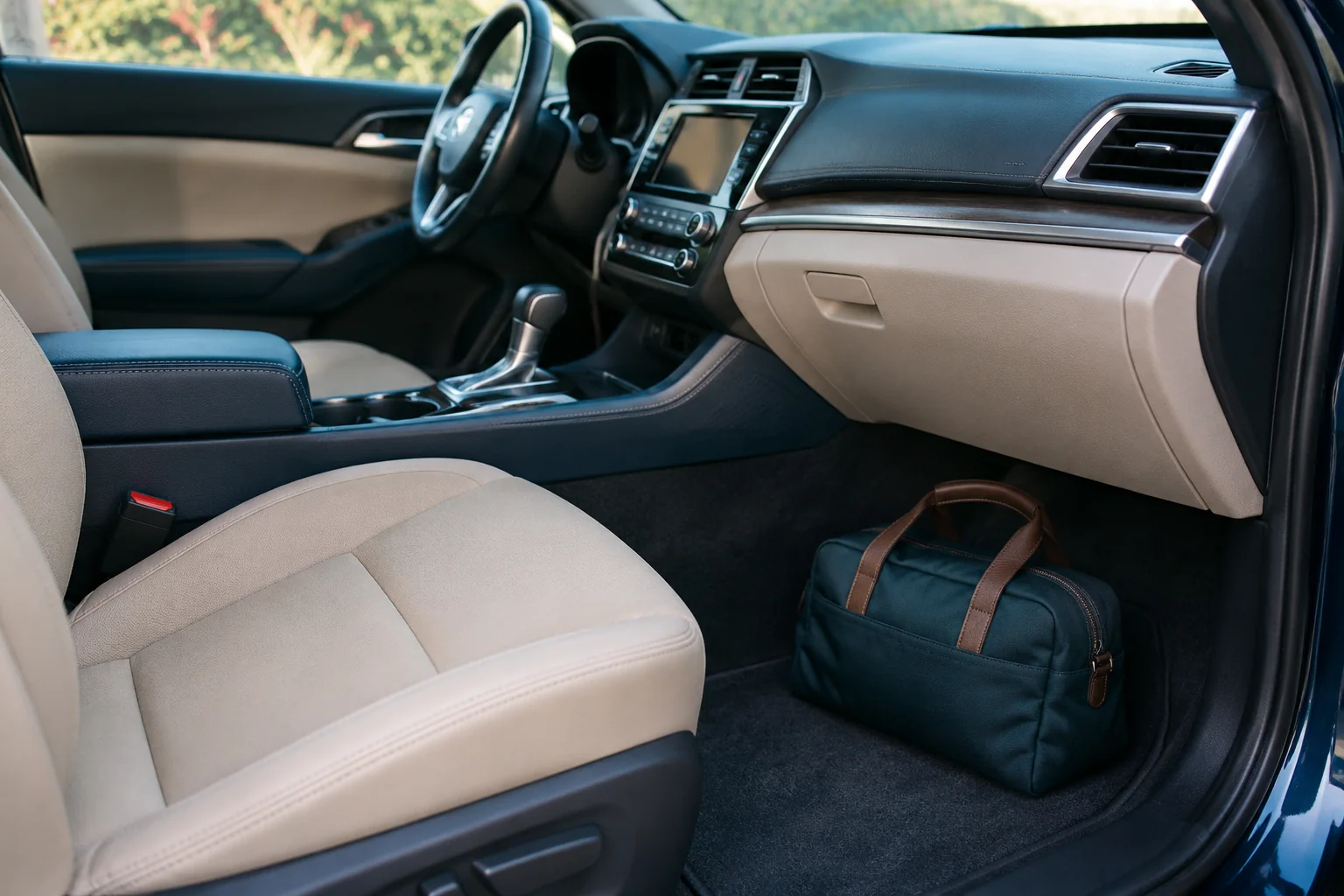
Start with an empty vehicle assumption
When planning car shipping with personal items, assume the vehicle must be empty until the actual carrier confirms an exception. The trunk is part of a vehicle being transported, not automatically an included household moving compartment. A booking representative's informal assurance needs to agree with the carrier's acceptance rules and the contract for your route. Ask what is permitted before packing rather than treating the pickup inspection as the moment to negotiate.
An empty vehicle also makes preparation simpler. You can photograph seats, floors, and the cargo area, see whether anything leaks, and give the driver unobstructed access to the controls. Remove daily essentials early: identity documents, medication, keys for your new home, chargers, and anything needed while the car is unavailable. A transport delay is inconvenient enough without losing access to the items that let you travel or work.
Use the household move coordination guide to divide the move into the vehicle shipment and the belongings shipment. If those arrangements remain separate, you can choose each service according to its actual scope. This does not mean every carrier prohibits all items. It means permission needs to come from the party accepting the cargo, with the specific items and route identified.
Ask for acceptance in a usable form
A useful approval names the carrier, the vehicle, the route, and what can remain inside. It should state any weight limit, allowed location, packaging restrictions, inspection rights, additional charge, and prohibited items. Ask whether the rule applies to the whole journey or only one leg. A road carrier's acceptance does not bind an ocean carrier, terminal, or destination customs authority that encounters the vehicle later.
Avoid reducing the discussion to a single question about the number of pounds. Two loads with equal weight can have different effects. Loose tools, fragile glass, lithium battery devices, liquids, and soft clothing present different handling concerns. Provide a realistic description instead of saying there are “just a few things.” If the carrier permits clothing in the trunk, that is not permission for a box of workshop chemicals or a bulky bicycle across the rear seats.
Keep the written response with the booking confirmation and send it to the pickup representative. Confirm the driver has the same instructions before loading. If the actual carrier changes, renew the approval rather than assuming it transfers with the reservation. The broker guide explains why an arranger's role differs from the carrier's physical acceptance of the vehicle and its contents.
Separate a company policy from a general rule
Personal cargo policies vary across services and routes. Do not treat one operator's allowance as an industry entitlement, or one operator's prohibition as a universal law. For example, Matson's vehicle shipping FAQ distinguishes its Tacoma and Alaska service when discussing personal effects. That distinction belongs to Matson's published service conditions. It is not evidence that the same arrangement is available on another ocean route or a domestic truck shipment.
Likewise, Wallenius Wilhelmsen's used unit receiving instructions prohibit personal effects in specified vehicle spaces, with references to separate allowed item guidance and motorhome exceptions. Those are operator instructions that must be checked against the actual booking. Reading them helps explain why a vehicle accepted by an inland truck might still be rejected at the port.
When someone says an item is forbidden by law, ask which rule applies and to which leg of the journey. Hazardous materials, customs declarations, and commercial operating authority raise real compliance questions, but they should not be collapsed into a vague claim that all personal belongings are either legal or illegal in every shipped vehicle. If the explanation remains unclear, ship the belongings separately under a service that explicitly accepts them.
Make weight part of the transport description
Additional items change the weight presented to the carrier. The truck's loading plan depends on more than the vehicle's model name, especially when several vehicles share equipment. Do not conceal cargo under a blanket or assume it is irrelevant because the trunk closes. Tell the carrier about the amount before equipment is assigned and follow any requirement to remove it. An undisclosed load can disrupt loading even if the bags seem modest individually.
Consider where the weight sits as well as the total. A heavily packed rear cargo area can alter the vehicle's stance and available clearance. Large objects can obstruct the driver's view or prevent access to tie down areas and controls. A transport professional should decide what the equipment can accept; the customer should provide accurate facts rather than attempt a loading calculation based on a generic allowance found online.
If the carrier allows a limited quantity, weigh packed bags or boxes rather than estimating from memory. Keep that record with an inventory and stay within the approved scope. The vehicle type guide covers other facts that belong in the same description, including modifications and unusual dimensions. A roof box, rear rack, and trunk contents should all be disclosed together so the transport plan describes the vehicle as delivered.
Check coverage without assuming permission creates it
Acceptance and insurance are different decisions. A carrier may permit certain items while excluding loss or damage to them. Vehicle cargo coverage does not automatically become household goods coverage when belongings sit inside the car. Ask specifically whether contents are covered, who provides the coverage, what exclusions apply, and what evidence is required. A sentence about the car being insured does not answer those questions.
Contact your own insurer if you expect a homeowners, renters, auto, or separate transit policy to respond. Describe that the belongings will remain inside a vehicle carried by a commercial transporter, and identify any ocean or international leg. Ask about deductibles, covered causes of loss, territorial limits, and proof of ownership. Do not infer coverage from the fact that a similar item was covered during ordinary use at home.
For valuable, sentimental, or essential items, separate carriage under your control may be the more workable choice even where an exception is offered. Evaluate the consequences of an uncovered loss alongside any saving in baggage or moving charges. The total budget guide helps keep these decisions visible. A low transport charge is not a complete comparison if the packed vehicle contains belongings whose loss would be difficult to document or replace.
Prepare an inventory that matches what travels
If contents are expressly accepted, make an inventory before the handoff. Describe items and quantities clearly enough that another person can identify what was packed. Keep photographs of the packed containers and any relevant serial numbers or purchase records outside the vehicle. An inventory is useful evidence of what you intended to ship, but it does not override exclusions or prove that a carrier accepted responsibility for each listed object.
Use packaging suited to the approved items, and follow the carrier's location instructions. Do not block seats or footwells the driver needs, or create a pile that can move when the vehicle is maneuvered. Ask whether boxes must remain open for inspection and whether the terminal requires removal at any stage. Avoid sealing something in a way that makes the vehicle difficult to inspect or creates an unexpected handling task at collection.
Give the receiver a copy of the inventory if that person will attend delivery. Tell them whether checking contents is included in the handoff process and what to do if something appears missing. Keep expectations realistic: an exterior vehicle condition report may not document the number or condition of personal items. If a separate contents acknowledgment is part of the agreement, obtain it before the car leaves rather than expecting a delivery signature to reconstruct the pickup record.
Treat dangerous goods as a separate acceptance issue
Do not pack fuel cans, fireworks, chemicals, aerosols, ammunition, or other potentially regulated materials merely because they fit inside the trunk. Their acceptance can depend on classification, packaging, quantity, transport mode, and operator restrictions. Ordinary household use does not establish that an item is suitable for a commercial vehicle shipment. Ask the provider for its prohibited items instructions and arrange an appropriate alternative for anything uncertain.
Battery powered devices deserve a specific question rather than a broad assumption about electronics. A device may contain a lithium battery, a damaged battery, or a loose spare that raises different concerns. The vehicle's own accepted propulsion system also does not mean any extra battery can be placed inside. Identify the object accurately and get the relevant carrier's answer. Do not conceal it or describe it as clothing to avoid a difficult conversation.
For an ocean shipment, route the question through the forwarder and ocean carrier before port delivery. A terminal rejection can force unpacking, storage, or a missed sailing. If the carrier cannot accept your proposed contents, change the packing plan while the vehicle is still accessible. The practical aim is a clean acceptance decision for each shipment, with belongings traveling through a service prepared to handle their actual characteristics.
Keep customs and vehicle export paperwork distinct
International transport adds border requirements that are separate from carrier permission. A forwarder who accepts a packed vehicle still needs accurate information about the vehicle and any goods inside. Destination rules may require an inventory, declarations, permits, duties, or inspection. Do not assume personal use creates an exemption. Ask the destination customs professional what information is needed before the vehicle is sealed, loaded, or delivered to the export terminal.
The vehicle also has its own export process. CBP's motor vehicle export guidance explains requirements for used self propelled vehicles, including ownership documentation and presentation timing for the applicable export method. Those requirements do not replace declarations for personal belongings. The international planning guide separates export, freight, import admissibility, and local registration so each task has an identified owner.
Check instructions for transshipment and every destination involved, not just the country where the vehicle first boards a vessel. If goods must be removed for inspection, establish who can access them and who pays the associated handling. Keep original identity and ownership documents in the location required by the responsible authorities and provider. Do not place every important paper in a locked glove box unless the confirmed procedure specifically calls for it.
Plan collection and delivery around the approved contents
Before collection, do a final cabin and trunk review against the written approval. Remove anything added after the inventory, including last minute shopping bags or tools used during preparation. Check storage pockets, the center console, and the spare wheel area. A careful review prevents an innocent oversight from becoming a disagreement over what the driver was asked to accept. Leave required vehicle equipment as instructed by the carrier and distinguish it from personal cargo.
At pickup, disclose the contents without asking the driver to reinterpret the contract on the roadside. If there is a conflict, pause for the appropriate office or dispatcher to resolve it. Record any change in writing. If the carrier requires removal, have a practical place for the belongings to go. Leaving boxes at an unauthorized meeting point is not a workable substitute for a separate moving plan.
At delivery, inspect the car and any accepted contents according to the agreement. Photograph visible concerns, keep relevant packaging, and report issues through the applicable claim channel promptly. Record who received the vehicle and when. The freight document guide helps connect those records with the booking and condition reports. A completed inventory and clear handoff make the facts easier to establish even when the coverage decision remains governed by policy terms.
Choose the simplest workable packing decision
The best packing plan is the one every party can carry out under clear terms. If approval is narrow, your belongings are hard to value, or the route has several handoffs, an empty vehicle may remove more uncertainty than a small baggage saving is worth. If a provider expressly offers an accepted contents service, compare its actual conditions with a separate shipment. Include extra handling, inventory work, access restrictions, and the consequences of delay in that comparison.
Write down the final arrangement in ordinary language: what stays in the vehicle, where it sits, how much it weighs, which legs accept it, and what coverage applies. Send the same version to the person releasing the vehicle and the person receiving it. This prevents the packing decision from changing as instructions pass through relatives, dealers, and drivers. A shipment that everyone understands is easier to prepare and easier to inspect when the vehicle reaches its destination.
Sources and further reading
Dates and the scope of individual rules are explained in the guide. Use the linked authority or operator to confirm requirements for your shipment.