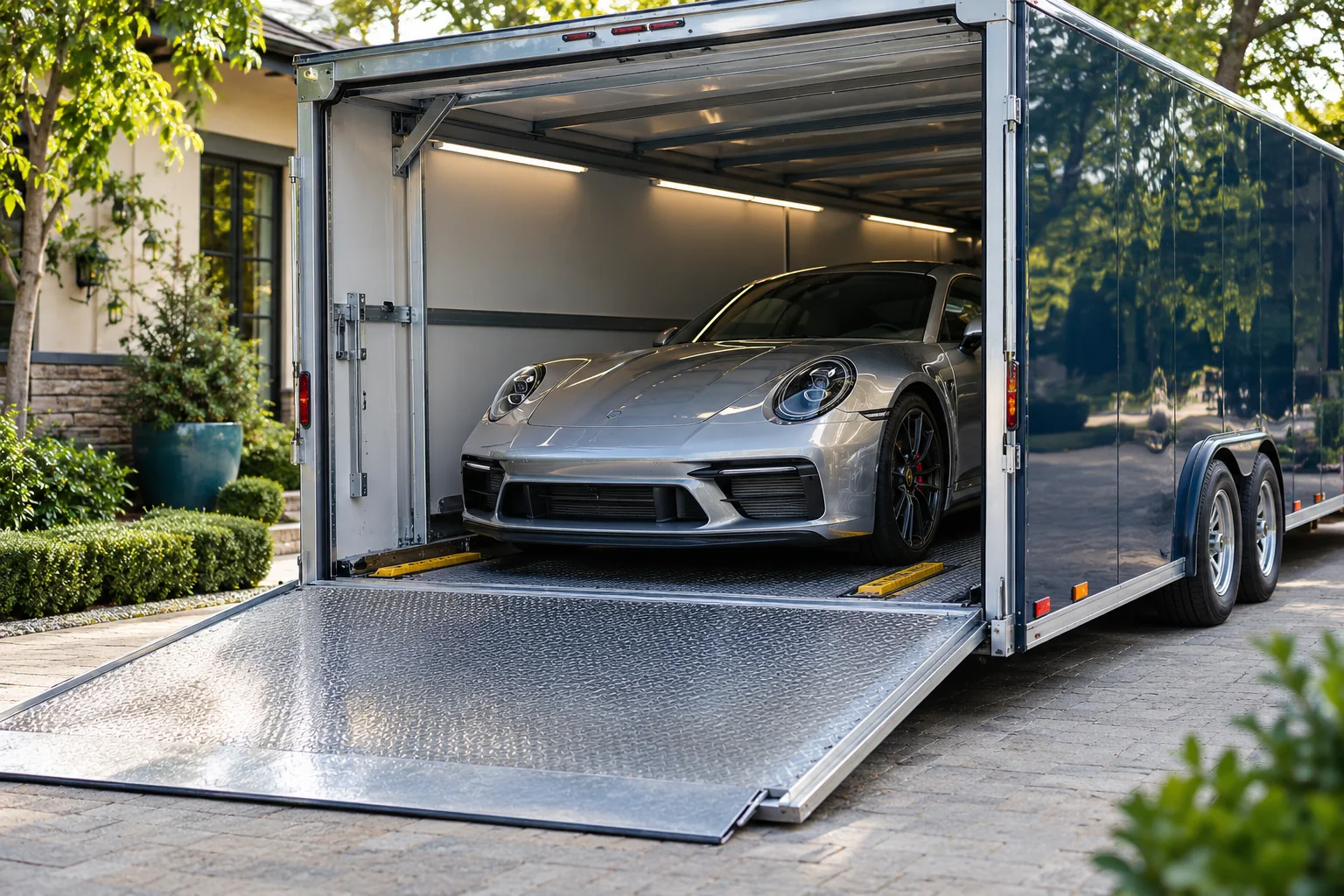
Start with the protection problem you need to solve
An enclosed car transport service places a vehicle inside a trailer enclosure, but the enclosure is only one part of the service. Begin by identifying what matters for your car. You may want a barrier from road spray and weather, less public visibility, appropriate loading for low clearance, or careful handling of a delicate finish. Write those requirements separately. They do not all follow automatically from the word enclosed, and different equipment arrangements may address them differently.
A valuable car is not the only vehicle that can have special needs. An unfinished restoration, an exposed cabin, a rare trim piece, or a suspension modification can change the planning question. The classic vehicle guide focuses on preservation details, while the luxury vehicle guide addresses complex systems and clearance. Choose the service by describing the actual vehicle and desired protection, then ask the operator to confirm that the proposed arrangement fits those facts.
Ask what kind of enclosure is proposed
Request a concrete equipment description rather than accepting a general service label. Ask whether the trailer has hard sides or another enclosure design, how the vehicle enters, and whether it remains enclosed during the planned haul. If climate management is important, ask about it specifically. A roof and sides do not, by themselves, establish temperature or humidity control. Likewise, enclosed does not automatically mean that no other vehicles will share the equipment.
An operator's own fleet page can illustrate the range of equipment it describes, including enclosed liftgate transporters and other trailer categories. That is evidence of that operator's stated equipment, not a universal specification for every enclosed shipment. Ask for the assigned arrangement in your own booking. The covered transport guide explains why covering terms need definition. Specific descriptions make it easier to understand what you are buying and to assess any proposed equipment substitution before the car is collected.
Separate loading design from the enclosure
A car can fit inside a trailer yet require special attention during entry and exit. Ground clearance, front and rear overhangs, wheelbase, underbody components, and ride height can all matter. Provide the operator with the relevant facts, photographs, and measurements rather than deciding that a particular loading method must work. The carrier should evaluate its equipment and determine whether it can accept the vehicle. Do not attempt to coach a driver through an unsuitable approach.
Ask whether a liftgate or another loading arrangement is planned and why it suits the car. Reliable Carriers' published case studies describe a situation where hydraulic liftgates addressed an approach-angle problem. This shows why loading design is worth discussing; it does not establish that every car needs the same solution. If the vehicle's ride height changes electronically or mechanically, explain its normal and permitted settings. Use the manufacturer's instructions and any relevant specialist guidance rather than improvising a transport setup at pickup.
Supply dimensions for the actual vehicle
Record length, width, height, and modifications where they affect fit. Distinguish the vehicle's normal specification from what is currently attached. A roof rack, wing, widebody conversion, oversized tire, splitter, or unusual mirror can alter the space required. Tell the provider whether any removable accessory will remain on the car. Measurements should use a consistent method and include the features that matter to clearance. Photographs give context but do not replace a requested dimension.
If the vehicle is not standard, send the information before assignment so the actual operator can review it. A salesperson's familiarity with the model does not establish knowledge of your modifications. Our vehicle type guide covers these variations. Ask whether acceptance depends on additional measurements or photographs and whether the written amount assumes a standard vehicle. This prevents the enclosed trailer from being treated as a universal solution when its physical space and access still impose practical limits.
Describe function without shorthand
Explain whether the car starts, moves under its own power, steers, brakes, and remains running long enough for ordinary handling. A collector car may technically start yet stall unpredictably. A restoration may roll but have no effective brakes. A modern car may need a charged low-voltage system to release a parking mechanism. These conditions affect the accepted handling plan regardless of whether the trailer is enclosed. Report them individually instead of calling the vehicle simply non-running or operable.
The non-running transport guide helps structure this disclosure. Tell the operator about leaks, loose parts, fragile components, or systems that cannot be used. If a repair is expected before pickup, state the current condition and the planned change separately. Then agree on what happens if the repair is not completed. An enclosed booking should reflect the car that will actually be presented, not the hoped-for version of the vehicle described during the first discussion.
Use manufacturer guidance for complex systems
Keep the relevant owner-manual instructions available for the person handling the car. Modern vehicles may have special requirements for moving, towing, securing, or entering a temporary handling mode. These instructions vary by model, year, system state, and sometimes region. A general internet instruction for a similar car is not a substitute for the correct manual. Explain unusual operation before pickup and confirm that the operator accepts the requirements.
For example, Tesla's 2020-2024 Model Y owner's manual contains instructions for transporters and limits the purpose of its handling mode. This is a model-specific illustration of why a mode name should not be interpreted as permission for every kind of movement. Do not activate a system and leave it in an unexplained state for the driver. Provide the appropriate key or access method, discuss any electrical limitation, and let the qualified operator follow the manufacturer's applicable procedure.
Confirm identity and custody as carefully as equipment
An enclosure does not replace the need to know which company is arranging the shipment and which carrier will take possession. The FMCSA automobile transporter advisory tells consumers to distinguish those roles and check interstate registration. Match the legal entity with the agreement and payment recipient. Add the actual hauling carrier's information when it is assigned, especially if a broker handles the booking.
Ask whether the vehicle is expected to remain on the same equipment and whether any terminal or transfer is included. If transfers are possible, identify who documents condition and custody at those points. Our freight document guide explains the record chain. A customer seeking limited handling should ask about the number and nature of handoffs explicitly. Neither an enclosed trailer photograph nor a premium service label tells you how many businesses or facilities will participate in the actual route.
Clarify privacy, exclusivity and route expectations
An enclosed trailer reduces direct visibility of its contents during the enclosed portion of transport. That does not establish confidential treatment of every pickup, photograph, customer name, or route detail. If privacy matters, state the concern and ask what the provider can commit to. Discuss who may receive location information and whether photographs are taken for inspection, operations, or other purposes. Separate necessary condition documentation from any optional publicity.
Exclusive use is another separate question. Ask whether the entire trailer is reserved for your car, whether other vehicles can be carried, and whether the route includes other collections or deliveries. The dedicated service guide examines these terms. Do not infer a direct journey from the word private or a temperature-controlled interior from the word premium. A workable agreement identifies the features that matter to you in observable terms, allowing the provider to accept or explain the limits before the car leaves your custody.
Make condition records suited to the finish
Prepare the car so the finish can be inspected, following any care restrictions appropriate to its paint, wrap, or restoration state. Take clear overall photographs and detailed views of existing marks. Include wheels, glass, lower panels, and fragile trim. If a surface is unfinished or newly treated, explain its condition and handling restrictions accurately. Do not create an unsupported instruction about washing, covering, or contact; use the relevant specialist or manufacturer guidance.
Review the pickup inspection with the operator and retain the actual record. A description such as excellent condition is too broad to explain a specific panel later. Note existing defects precisely, including marks that are visible only from a certain angle. Send the destination receiver the record and the photographs before arrival. The purpose is a shared baseline, not a prediction of damage. An enclosure adds a physical barrier during travel, while documentation explains the condition at handoff. Both have distinct roles in a carefully planned shipment.
Ask about coverings and removable accessories
Do not assume a loose car cover should be installed for transport simply because it is useful in a garage. Ask the carrier what it accepts and consult relevant care guidance for the vehicle's finish. A covering is a separate item with its own fit, attachment, and contact considerations. The operator should approve any accessory or protective material that remains on or around the car. Remove items that the accepted service does not allow and document what is left.
Likewise, discuss spoilers, detachable roofs, roof racks, and spare components. If an item is shipped inside the vehicle, clarify acceptance, inventory, and coverage rather than treating it as part of the car automatically. Our contents guide explains that distinction. Enclosed space is not permission to fill the cabin with household belongings or valuable spare parts. Describe every requirement that could affect handling, weight, access, or a condition claim so the provider can make an informed decision about the full shipment.
Evaluate coverage for the described vehicle
Ask about cargo coverage for the actual carrier, including limits, deductibles, exclusions, and claims instructions. Explain an unusual value, restoration status, or special finish when those facts matter. A generic statement that insurance is included does not answer whether the policy addresses your particular concern. Request clarification before pickup so there is time to review the information with an appropriate insurer or adviser if needed.
Keep the coverage question separate from the enclosure question. Physical protection and financial protection are different parts of the decision. A higher service charge does not automatically establish a larger applicable limit or a broader policy. The enclosed cost guide helps compare the service components without inventing universal prices. Record the claim contact and stated deadlines alongside the pickup and delivery documents. If the receiver is someone else, give them the reporting instructions in advance so a concern can be documented accurately rather than discovered in a hurried call after the driver leaves.
Match the schedule to the specialized requirement
Tell the provider which features are essential and which are preferences. A particular loading design, exclusive equipment, or a restricted receiving appointment needs to be part of assignment planning. Ask what remains unconfirmed and when it will be resolved. Do not assume that a general enclosed booking means a specific trailer is already committed. Keep your household travel and receiving plan workable within the actual written timing terms.
If the car is going to an auction, event, restoration facility, or exhibition, include receiving hours and release conditions. A venue deadline and an estimated arrival are different facts. The time-sensitive service guide helps separate pickup and delivery commitments. Arrange a backup contact or an approved receiving option where needed. This is especially useful when the owner is traveling separately or cannot remain available throughout the delivery range. The specialized equipment requirement should be coordinated with the complete event calendar, not discussed only as a trailer preference.
Verify the final handoff against the accepted plan
Before pickup, confirm that the assigned operator has the vehicle details, access plan, and special requirements. If the equipment differs from what was agreed, ask for an explanation before releasing the car. The relevant question is whether the replacement meets the accepted requirements. Resolve any material difference through the appropriate contact and keep the written record. Do not let an attractive trailer appearance replace the practical checks you established earlier.
At delivery, inspect in usable light, compare condition with pickup records, photograph the car, and record any concern precisely before finalizing the paperwork under the carrier's process. Preserve a signed copy and follow the stated reporting instructions. Then retain the complete file with payment records and material messages. Enclosed transport is most clearly defined when the protection, loading, custody, schedule, and documentation are all specified. That gives the owner and operator a common description of the service rather than a set of expectations attached to one broad word.
Sources and further reading
Dates and the scope of individual rules are explained in the guide. Use the linked authority or operator to confirm requirements for your shipment.