Build the facts before comparing the amounts
A car shipping estimate is useful when it describes the vehicle and service you actually need. If the initial facts are incomplete, a precise-looking number can create false confidence. The provider may be assuming a standard vehicle, unrestricted access, normal operation, or a broad pickup window that your move does not have. Start with a concise shipment fact sheet so every company evaluates the same conditions.
The fact sheet is not a request form and does not generate a price by itself. It is a record you control. It helps you answer questions consistently, identify unknowns, and notice when a written proposal has changed an assumption. Keep sensitive documents separate from the summary. A provider can usually assess basic route and equipment fit without receiving your full title, identification, or personal travel itinerary at the first conversation.
The quote comparison guide explains how to read the resulting proposals. This page addresses the information that comes before them. The goal is to prevent avoidable differences between what was described, what was priced, and what the driver finds at pickup. A short, accurate description is more effective than a long message that leaves the important measurements, release conditions, or dates unclear.
Identify the exact vehicle configuration
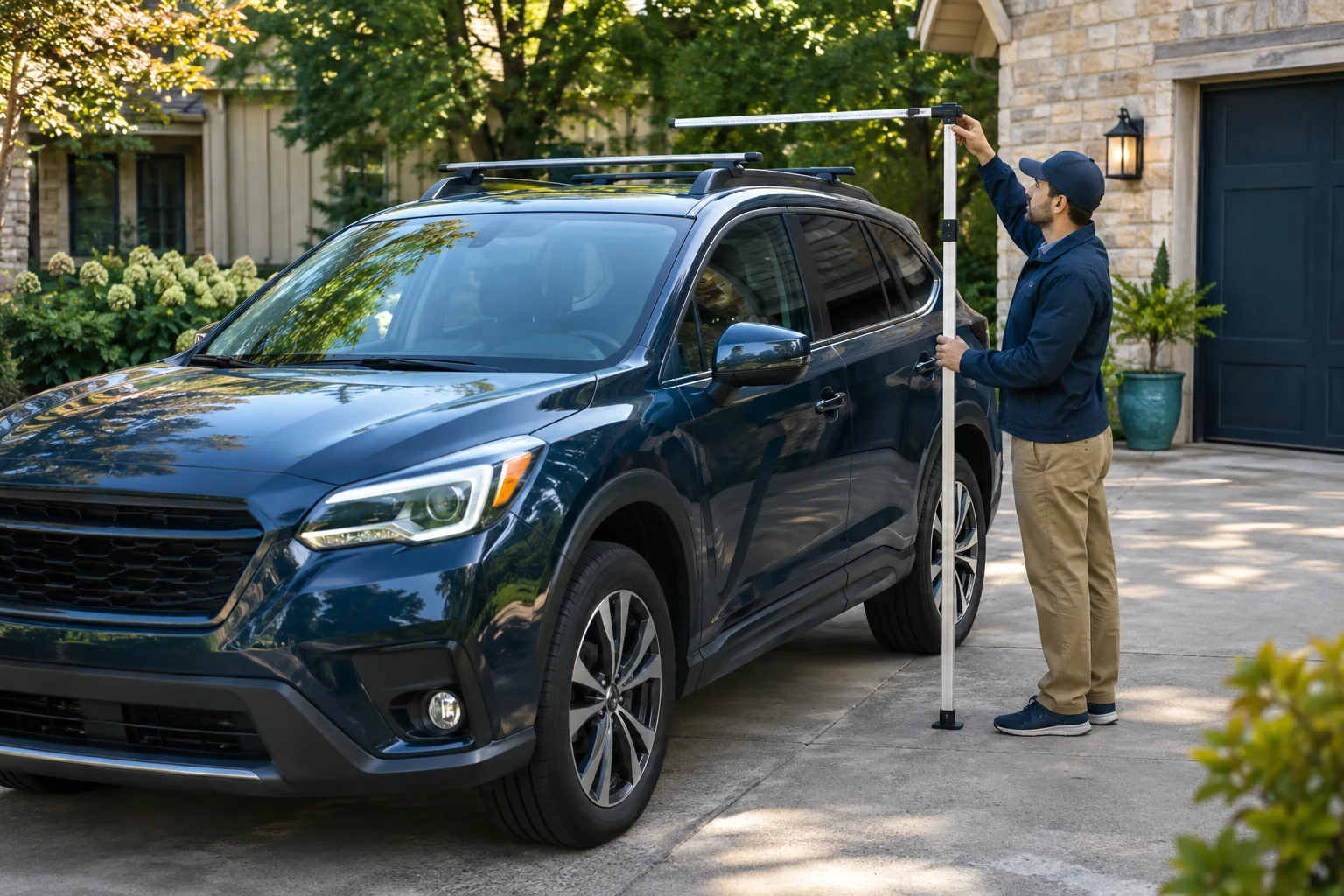
Record the year, make, model, body style, trim, and the configuration that affects physical size. For a pickup, cab and bed length can matter. For a van, wheelbase and roof height can distinguish very different vehicles sharing one model name. Include modifications such as suspension changes, wide tires, a roof tent, a fixed rack, a front splitter, or an aftermarket bumper. Specify which accessories will remain installed for transport.
If measurements are relevant, note actual length, width, height, and the units used. Explain what each includes. A height measured without the roof box does not describe a vehicle that will travel with the box attached. A published dimension may assume a different trim or exclude a protruding accessory. Use manufacturer information as a starting point and disclose where the actual vehicle differs. If a measurement is unknown, mark it unknown instead of entering a plausible guess.
Photographs can clarify the description. A full side view and front and rear views help an equipment planner see proportions and modifications. Detail images can show low bodywork or an accessory mount. They do not replace a required measurement, and they should not conceal a known problem. The vehicle type guide explains why SUVs, pickups, EVs, and other configurations may require different acceptance questions even when all are ordinary passenger vehicles.
Describe operation as separate facts
Avoid relying only on a running or non-running label. Record whether the engine or propulsion system starts consistently, whether the car moves under its own power, whether it steers normally, whether the wheels roll freely, and whether the brakes function. Identify the availability of a working key and any issue with the parking brake, transmission selection, steering lock, or battery. These facts describe the handling task more clearly than a single category.
For an intermittent issue, explain the pattern honestly. A vehicle that started yesterday but needs repeated assistance should not be described as reliably running. A car at a repair shop may have changed since the last update you received. Ask the person holding it to confirm its current state. If you cannot verify a fact, say who will confirm it and when. The estimate can then show which assumptions remain provisional.
The non-running transport guide helps distinguish limitations that affect loading equipment. Do not attempt to solve the loading problem in your fact sheet. FMCSA identifies the motor carrier and driver as responsible for proper loading and securement. Your contribution is a truthful account of the vehicle so they can decide what equipment and professional handling are suitable.
Explain the pickup site beyond the postal address
Give the pickup area and the type of location: residence, dealership, auction, repair shop, storage yard, or another facility. Then describe the access conditions that could affect a truck. Note gates, narrow entrances, steep approaches, low branches, overhead structures, parking restrictions, and hours when vehicles can be released. A facility with a large lot may still require an appointment, an account reference, or a specific gate for collection.
Separate physical access from administrative release. The truck may fit perfectly while the seller refuses release because payment is not cleared or a storage balance remains. Identify the person who can authorize the vehicle to leave, what documents they require, and when the car will actually be ready. If readiness depends on a repair, purchase settlement, or inspection, do not present the earliest hoped-for date as a confirmed release date.
If the street or facility may be unsuitable, ask the provider to evaluate a legal alternative meeting point. Do not select a random parking lot without checking permission and suitability. The door-to-door guide covers practical access boundaries. In your fact sheet, record whether an alternative is already agreed or remains to be arranged. That distinction helps prevent one estimate assuming easy access while another includes an additional local movement.
Give delivery its own access and receiving record
Delivery deserves a separate entry because its limitations often differ from pickup. Record the location type, truck access concerns, receiving hours, and the person authorized to accept the car. If you are moving to a new home, confirm when you can legally use the property and whether parking will be available. A future address may be known before access has actually been arranged.
State whether the receiver can travel to a nearby meeting point and whether that person can drive the vehicle afterward. A non-running car delivered to a public lot may need another professional movement to reach its final storage space. A receiver who lacks a working key, required payment method, or authority to sign can also delay completion. Include these facts when they affect the scope, while keeping private identity documents out of the general summary.
If no one will be available on certain days, list the exclusions plainly. Saying delivery is flexible while the only receiver is away for half the week misdescribes usable availability. Ask how an unsuccessful delivery attempt, storage, or revised appointment would be handled. Those terms belong in the resulting agreement, but the fact sheet should reveal the need early. Final delivery cost planning explains why a last-mile transfer or special release arrangement should be identified separately.
Use date windows with clear meanings
Record the earliest date the car will be ready and any latest acceptable pickup date. Then list the delivery availability and any event for which the vehicle is needed. These are different dates with different consequences. A provider should not have to infer that a wedding, work start, or storage deadline creates a firm need merely because you gave a preferred arrival day. Explain the constraint and ask whether the proposed service can meet it.
Describe flexibility in operational terms. You might be available every weekday during business hours, or only on two named afternoons. You may be willing to move the pickup window while needing advance notice to arrange a release representative. Those facts are more useful than checking a broad flexible category. Include the notice you need and who can answer if you are in transit when the driver calls.
The expedited shipping guide separates urgency at collection from urgency at delivery. If the provider offers an estimated window, keep that wording in your comparison rather than rewriting it as a guarantee. A fact sheet should describe your requirement; the proposal should state what the company commits to do. Keeping those two records distinct makes a gap visible before it becomes a missed expectation.
Specify equipment and service preferences accurately
State whether you require open transport, enclosed equipment, dedicated capacity, or another arrangement. Then explain the reason where it affects suitability. A request to reduce road exposure may be satisfied differently from a requirement for continuous exclusive use. A low-clearance car may need a particular loading capability regardless of whether the trailer is open or closed. Use the covered equipment guide to describe protection more concretely.
Do not request every premium feature automatically. Some may be unnecessary for the car or inconsistent with your schedule. Instead, identify which conditions are requirements and which are preferences you would trade for a different price or window. A provider can then explain the actual options. When comparing estimates, keep the required version consistent and label any alternative service separately so its lower amount is not mistaken for a directly comparable offer.
If the plan includes ocean, rail, or air transport, identify that at the outset. A domestic truck estimate does not automatically include a port appointment, export filing, terminal charge, or destination collection. International acceptance and documentation require their own review. The fact sheet should state which stages you want the provider to handle and which another party will arrange. A useful estimate follows those boundaries instead of folding an undefined overseas service into a single vague line.
Identify accessories, contents, and special vulnerabilities
List any loose parts or accessories intended to accompany the car and ask whether the carrier accepts them. Personal property is a separate acceptance and protection question. Do not assume that a trunk full of household goods is included because the items fit inside the vehicle. Weight, access, security, and route-specific requirements may affect the answer. The personal items guide explains what needs separate confirmation.
For a restoration, mention unfinished surfaces, openings, fragile trim, or components that need particular handling. For an electric vehicle, disclose relevant power or damage concerns and locate the correct manufacturer guidance. For a car with unusual controls, prepare a short operating note for the eventual carrier. The estimate summary need only flag the issue and identify the supporting information; it should not become a substitute for a professional acceptance decision.
Record any protection requirement arising from the car's value or condition. Ask what value evidence and cargo coverage information will be needed before collection. FMCSA's insurance filing guidance shows that public filing requirements vary across entities and operating authorities. An estimate that says insured does not fully explain coverage for your vehicle. Keep the price question and the protection question connected, while obtaining the specific terms for each.
Ask the provider to state its assumptions
When a proposal arrives, compare it with your fact sheet. Check that the vehicle, operation status, addresses or service areas, equipment, and dates match. If a detail has been simplified, ask whether that simplification changes the estimate. A model name alone may omit a modification you disclosed. A city name may omit the difficult access at the actual address. Resolve those differences before treating the number as comparable with another proposal.
Ask what the amount includes, how long it is valid, and what circumstances could change it. Identify the stage of the booking: initial estimate, pending assignment, or confirmed carrier arrangement. Clarify who is offering the service and who will perform the transport. FMCSA's automobile transporter advisory distinguishes a broker that arranges transport from a carrier that performs it. That role should be visible in the documents.
Save the provider's response beside the dated fact sheet used to obtain it. If you later alter the vehicle configuration or readiness date, you can see exactly what changed. The shipping rates guide explains why dated terms matter. An estimate is easier to evaluate when its assumptions are explicit, and easier to revise when both parties can point to the same version of the shipment description.
Maintain one current version through handoff
Assign a date to the fact sheet and update it when a material detail changes. Changes can be simple: the repair shop completes work, the battery fails, the roof rack is removed, or a receiver's availability narrows. Send the update to the responsible provider and ask whether it affects equipment, timing, or price. Do not assume a message reached dispatch merely because it was mentioned to a sales contact in an earlier conversation.
Once a carrier is assigned, confirm that it has the handling and access information it needs. Give the releasing party the current assignment and the receiver the current delivery instructions. A careful estimate process can still fail if the operational team works from an outdated vehicle description. Keep sensitive access codes and identity information in the appropriate channel rather than distributing the complete planning record to everyone involved.
At pickup, the fact sheet should resemble the car and location in front of the driver. Any remaining discrepancy should be addressed before loading. After delivery, preserve the accepted proposal, revisions, condition reports, and receipts as the shipment record. Accurate estimating is not a claim that no change will ever occur. It is a way to establish a truthful starting point, make changes visible, and avoid preventable disagreement about what service was requested and priced.
Sources and further reading
Dates and the scope of individual rules are explained in the guide. Use the linked authority or operator to confirm requirements for your shipment.