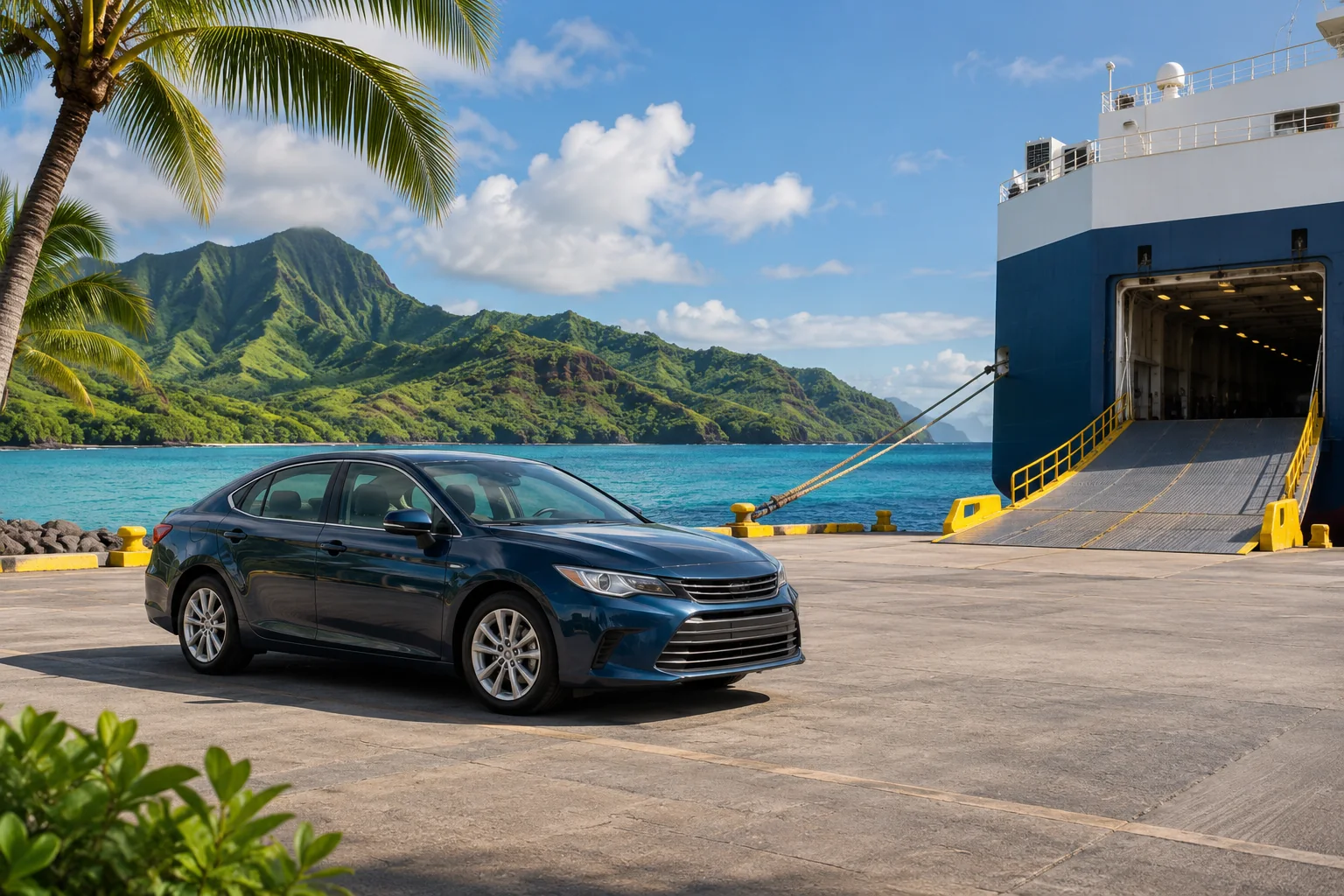
Build a mainland, ocean, and island itinerary
Hawaii car shipping is a coordinated journey rather than one road trip. Your vehicle may need mainland collection, delivery to an ocean terminal, a booked sailing, destination terminal release, and a local island handoff. If you live near the departure port, you might complete the mainland stage yourself. If your final destination differs from the ocean service's discharge point, another movement may be necessary. Identify every stage before comparing a total.
Start with the destination island and the actual port or facility included in the proposed service. Hawaii is not a single delivery address. Ask the operator which locations it serves for the route and vehicle you are considering, whether any connection is included, and where you personally collect the car. Do not infer a direct service from a map or a broad statewide description. Current schedules, terminal arrangements, and booking confirmations should define the actual itinerary.
Make one planning sheet with the business responsible for each stage, its booking reference, the vehicle identification details, and the person authorized to release or receive it. Keep ocean and highway contacts distinguishable. The road transport workflow explains a mainland haul, while the transport document guide helps organize handoffs. Your objective is a connected plan in which the car never arrives at a facility that has no booking, authorization, or confirmed next step.
Keep household travel on its own timeline. You may arrive before the vehicle is available, and a flight booking does not reserve terminal capacity or establish a collection appointment. Arrange the transportation you need during that interval using the actual arrival and release information supplied for your shipment.
Confirm the ocean operator and the actual service
Matson and Pasha Hawaii publish personal-vehicle shipping information on their official websites. Use those primary instructions to confirm route availability, booking procedures, terminal locations, and vehicle eligibility for your proposed shipment. The Matson vehicle FAQ and Pasha Hawaii shipping checklists are starting points, not interchangeable rulebooks. A policy stated by one operator should not be assumed to govern another.
If an arranging business sells the full journey, ask which ocean operator will carry the vehicle and what booking evidence you will receive. Clarify whether the arranging business also handles mainland trucking, terminal delivery, island collection, or only the ocean reservation. The customer should know where each business's responsibility begins and ends. A bundled invoice can be convenient, but it still needs a clear scope and a traceable custody plan.
Do not automatically apply an international shipping checklist to a mainland-to-Hawaii movement. Hawaii is a U.S. state, and a domestic ocean journey differs from a foreign import. The Federal Maritime Commission describes its mission around international ocean transportation; its presence in ocean-shipping research does not by itself establish the correct process for every domestic dispute or shipment. Use the operator's applicable contract and the relevant public authority for the specific question. Keep domestic mainland-to-Hawaii planning distinct from a vehicle arriving from another country.
Coordinate mainland arrival with terminal acceptance
If a road carrier takes the car to the departure terminal, the timing must fit the ocean operator's acceptance process. Ask when the vehicle may be delivered, what reference the driver must present, whether appointments apply, and what happens if the road journey is delayed. A projected sailing date is not useful if the vehicle reaches the facility after its applicable cutoff or without the required booking information.
Matson's FAQ says a booking must be arranged before arriving at the port because port personnel cannot create it there. Pasha notes that some receiving or delivery facilities require appointments. These are operator-specific examples of why a road carrier needs more than a street address. Confirm the current instructions for the actual terminal, then provide them to the person delivering the vehicle. Avoid leaving the driver to resolve an unbooked arrival while your travel plans are already underway.
Keep a buffer appropriate to the actual schedules without inventing a universal number of days. Ask what happens if the booked sailing changes and who will notify you. Store the terminal's operating hours and contact details with the booking record. The long-distance road planning guide helps coordinate a mainland leg, while the access guide covers collection logistics. The road and ocean stages should share the same vehicle condition and identification information so that a discrepancy does not emerge only at terminal receipt.
Prepare under the selected operator’s current rules
Vehicle preparation should follow the selected operator's instructions for the route and vehicle type. Ask about cleanliness, fuel, battery state, alarms, keys, modifications, dimensions, and any special requirements for electric or hybrid vehicles. These details can change and may differ between operators. Do not copy a fuel or battery rule from a general article and assume it remains valid for your booking.
Pasha's vehicle checklist states that vehicles must be drivable, clean, and free of fluid leaks. Matson's drop-off guidance explains key access and inspection requirements. Use those documents to create your own preparation checklist, then resolve any unusual condition directly with the operator before terminal delivery. A vehicle accepted for a mainland truck is not automatically eligible for the planned ocean service, particularly if it becomes inoperable or has a condition the operator must evaluate.
Clean the car sufficiently to make condition inspection useful, and pay attention to areas that can carry dirt or plant material. Hawaii's agricultural entry guidance explains that agricultural material is subject to inspection. It does not mean every vehicle preparation detail is a statewide rule. Follow the operator's current vehicle checklist and ask about any questionable contents or contamination. Keep the distinction between public entry requirements and contractual acceptance conditions clear so that you know whom to contact when a question arises.
Remove assumptions about personal items
A vehicle shipment should not become an unapproved household-goods shipment. Ask the ocean operator exactly what may remain inside and how any permitted item must be handled. Do not assume that a mainland truck's permission carries through the port. Different legs can have different restrictions, and a vehicle accepted at pickup may still be refused or delayed at the ocean terminal if its contents violate the next operator's terms.
For its relevant vehicle services, Matson's FAQ prohibits personal items apart from specifically stated exceptions and distinguishes an Alaska service exception. That Alaska provision should not be imported into a Hawaii plan. Check the wording applicable to your actual route. Pasha supplies its own preparation instructions. Use the selected operator's current policy rather than combining the most permissive parts of several companies' rules into a checklist none of them accepts.
Inventory anything that must travel by another method and budget that shipment separately. Keep important original documents, medicine, valuables, and items you will need during the journey under your own control. The items-in-vehicle guide explains why permission and coverage are separate questions. If a particular factory accessory or child seat is allowed, that does not establish that all cabin space is available. A clean, compliant vehicle reduces terminal surprises, and a separate household shipment avoids relying on capacity the vehicle contract never promised.
Document condition at every custody boundary
A multi-stage movement benefits from records at each transfer. Photograph the car before the mainland carrier receives it, keep that carrier's condition report, and retain the ocean terminal receipt or survey record. If another person delivers the car to the port, ask how they will obtain and send the terminal documentation. A condition record you cannot access until weeks later is less useful when a discrepancy first appears.
Use clear photographs that show the exterior, wheels, glass, and any existing damage relevant to the shipment. Note modifications or loose components before handoff. Do not rely solely on a wide photograph in which small marks cannot be distinguished. At each stage, compare the written condition description with what can actually be seen, and ask for correction of an omission before signing an unrestricted acknowledgment.
At destination, allow time to inspect before leaving the terminal or completing the applicable receipt. Follow the ocean operator's process for documenting exceptions and reporting concerns. If a local carrier collects for you, give it instructions about condition records and timely notification. The local delivery planning guide explains this final leg. Coverage, claim procedures, and responsibility may differ across the journey, so preserve the records that help establish when custody changed. A continuous file is more useful than assuming the business that sold the booking handled every physical stage.
Plan destination availability and terminal pickup
A vessel's arrival and a vehicle's availability for collection are different milestones. Ask how the operator notifies the consignee, when pickup may occur, what identification or authorization is required, and which charges must be settled first. Confirm the terminal's hours and any appointment rule. Do not schedule a flight or local carrier solely around an estimated vessel arrival without understanding the release process.
Pasha's checklist explains its arrival-notice process and warns that storage charges apply after the relevant free period. Other operators publish their own collection and storage terms. Obtain the current terms for your booking and record when the clock begins. Avoid freezing a particular daily amount into your household plan without checking the operator's applicable schedule and contract. A person who cannot collect promptly may need an authorized representative or another agreed arrangement.
If your final address is on another island, confirm the onward service explicitly. Young Brothers publishes a separate interisland vehicle process with its own acceptance and authorization instructions. That process should not be assumed to match a mainland ocean operator's rules. Check whether a connection is part of your booking or a separate contract, and identify where custody changes. Give any receiving representative the documents, payment instructions, and inspection plan needed for the actual terminal rather than a generic island pickup checklist.
Continue with the correct county’s vehicle process
Terminal release does not complete the road-use and registration work for a vehicle arriving from another state. Hawaii's county authorities publish the applicable processes, and details differ. Start with the county where the vehicle will be used or registered and your circumstances, including ownership, existing registration, lien, and any applicable military status. Do not treat a shipping company's checklist as a substitute for the county's current instructions.
For Oahu, Honolulu's motor vehicle information states that an arriving vehicle needs an out-of-state permit or Hawaii registration within thirty days and describes an inspection, documentation, and return-to-inspection sequence. It identifies shipping documents with the vehicle identification number among the relevant records. That is an Oahu process. Confirm the current application and appointment requirements directly, including the documents appropriate to your ownership and lien situation.
Hawaii County publishes separate out-of-state permit guidance and registration transfer instructions. Kauai also publishes its own out-of-state vehicle guidance. These sources show why preserving the bill of lading and arrival evidence matters. Ask your insurer about the documentation required for local operation and inspection. Keep county fees and ownership obligations separate from the transport charge, and resolve unusual or modified vehicle eligibility with the proper authority before assuming registration will be routine.
Budget the stages and distinguish the return journey
Build the budget with separate lines for mainland hauling, ocean service, terminal-related charges under the booking, any island transfer, your collection travel, temporary transportation, and destination vehicle administration. Record who receives each payment and which work is included. If a seller offers one combined amount, obtain the boundaries and exclusions. A total that ends at the port cannot be compared directly with one that includes a local handoff at an accessible address.
A future Hawaii-to-mainland shipment needs a fresh checklist. Matson's drop-off guidance distinguishes additional outbound ownership and authorization documentation for the specified Hawaii-to-mainland services. Do not assume the documents used when bringing the car to Hawaii are sufficient for taking it out. Confirm the current operator requirements and relevant Hawaii rules for the actual direction, owner, and person presenting the vehicle.
Before the move begins, check the destination island, terminal booking, vehicle readiness, permitted contents, authorized contacts, and document copies. Give each participant only the current instructions for the stage they handle. After pickup, retain the condition records and ocean arrival documents until any issue and the destination administrative process are complete. A workable Hawaii shipping plan connects the road, ocean, and island stages with named responsibilities and verified instructions, then continues far enough to make the car usable at its destination.
Sources and further reading
Dates and the scope of individual rules are explained in the guide. Use the linked authority or operator to confirm requirements for your shipment.
- Matson personal vehicle FAQ
- Matson vehicle drop-off instructions
- Pasha Hawaii vehicle shipping checklists
- Honolulu motor vehicle registration information
- Hawaii County out-of-state vehicle permit
- Hawaii County out-of-state registration transfer
- Kauai out-of-state vehicle guidance
- Young Brothers interisland vehicle process
- Hawaii agricultural entry guidance
- Federal Maritime Commission mission and jurisdiction context