Ask what the cover actually is
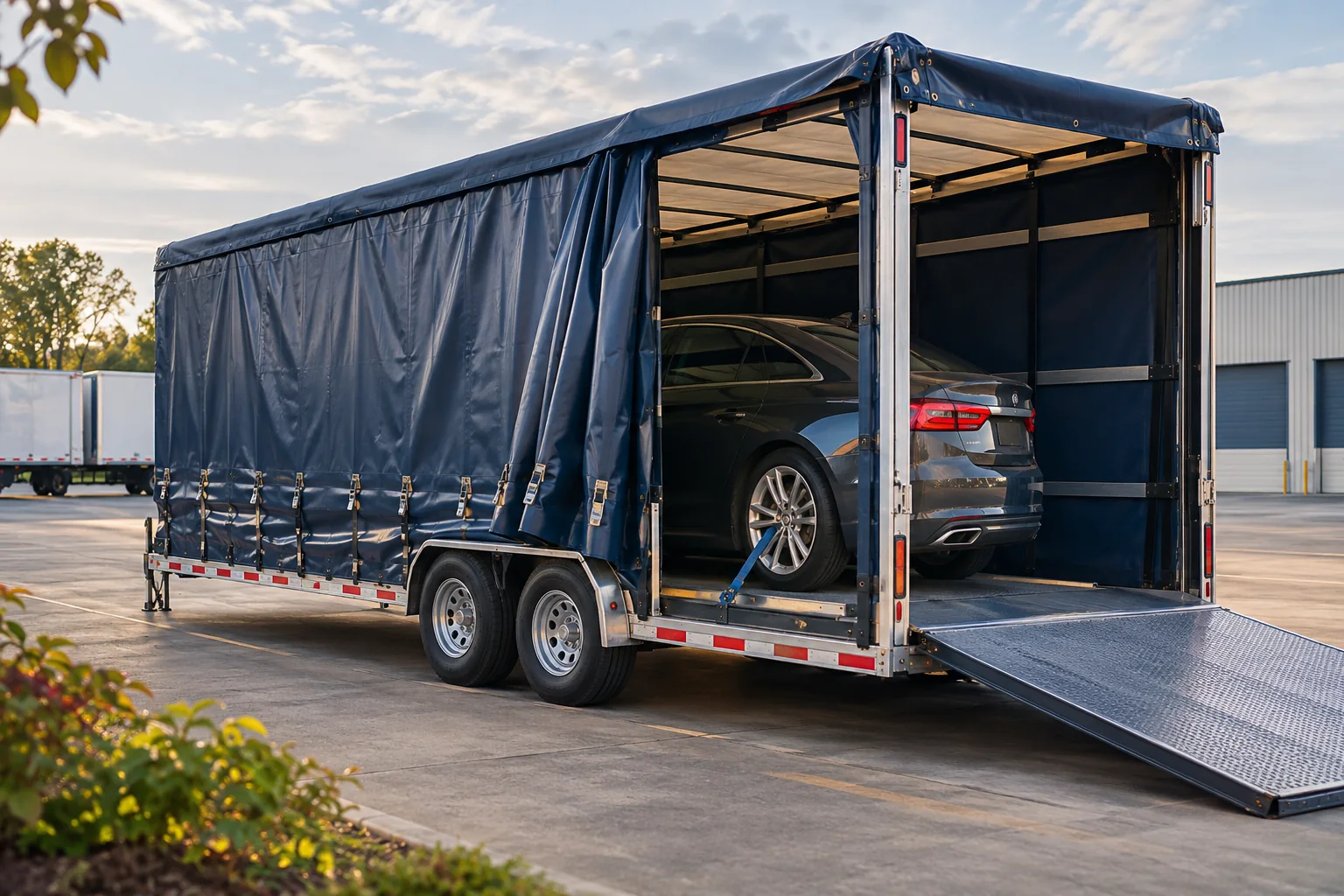
Covered car transport can describe several different arrangements. It may mean a fully enclosed hard-sided trailer, a curtain-sided trailer, a vehicle cover used on another type of equipment, or a service described loosely as protected. Those arrangements expose the car to different conditions and create different loading questions. Before comparing prices, ask the provider to identify the equipment in plain terms and describe how the vehicle is sheltered on every part of the trip.
A useful answer explains the roof, sides, front, rear closure, floor or deck arrangement, and how the loading opening works. Ask for representative equipment photos and confirm whether they show the type expected for your shipment. A photograph can help you understand the arrangement, but it does not reserve that exact unit unless the agreement says so. If substitution is allowed, ask what protection features must remain equivalent and how you will be notified.
This guide examines the physical scope of covered transport. The broader enclosed car transport guide addresses choosing that service for a vehicle. The private and dedicated transport guide addresses exclusive use. A trailer can be covered and shared, or covered and dedicated. Establish each feature separately so the equipment description supports the protection you actually want.
Understand hard sides as one part of the enclosure
A hard-sided trailer uses rigid panels around its cargo area. That construction provides a physical separation from direct road spray and many outside objects while the trailer is closed. It does not turn the interior into a sealed museum room or establish climate control. Doors, vents, joints, the floor arrangement, and normal loading operations still matter. Ask what the operator means if it uses terms such as sealed, protected, or weatherproof.
The interior layout affects vehicle handling. A multi-level trailer can have different clearances, door access, and loading sequences from a single-level unit. The owner does not need to design the load, but should disclose the car's true dimensions and any delicate or protruding components. The equipment planner can then evaluate fit and loading geometry. A rigid wall offers little benefit if the assigned space does not accommodate the vehicle safely.
Ask whether the car remains inside closed equipment between pickup and delivery or whether staging occurs elsewhere. If the plan includes a terminal or local collection leg, the hard-sided feature may apply only to the main highway portion. That can be acceptable when disclosed and suited to the car, but the description should identify the limitation. Protection is best understood as a sequence of environments rather than a single photograph of the largest trailer in the journey.
Understand soft sides without assuming an outcome
Soft-sided equipment commonly uses flexible side material that forms part of the trailer enclosure. Design, condition, closure systems, and the surrounding structure vary. The label alone does not tell you whether the roof is rigid or flexible, how the curtains close, or what objects can enter around the edges. Ask the provider to describe the specific equipment category and the conditions against which it is intended to protect the vehicle.
Avoid broad claims that every soft-sided trailer is unsafe or that every hard-sided trailer offers the same protection. Suitability depends on the actual construction, maintenance, route, vehicle, and agreed handling. A curtain-sided system may provide useful shelter for a particular movement while still differing from a rigid-sided enclosure in ways important to your car. State the concern, such as road debris, rain during staging, or visibility from outside, and ask how the proposed setup addresses it.
A representative photo of a closed trailer may conceal the details you need. Ask about the loading opening, closure at the bottom, interior separation, and how the curtain is secured during travel. These are questions for the operator to answer, not an invitation for the customer to inspect or adjust trailer hardware. If your protection requirement cannot be met by the proposed construction, ask for a different equipment specification before agreeing to the service.
Distinguish a vehicle cover from a trailer enclosure
A fabric cover fitted over the car is a different product from a covered cargo space. It may contact paint, glass, trim, and accessories, and its suitability for transport depends on its design and the carrier's acceptance. Do not assume a cover intended for a parked car is appropriate at transport speeds or in the carrier's loading environment. A loose or unsuitable cover can create a handling issue rather than resolve one.
Ask whether the operator permits vehicle covers, who supplies and installs one, whether it remains fitted during inspection, and whether it is intended to stay on throughout the journey. Check the cover manufacturer's instructions for the specific product. If it has limitations concerning dirt, moisture, wind, or attachment, give those instructions to the provider and ask whether the proposed use is consistent with them. Do not improvise extra straps or attach material to vehicle parts yourself.
A cover may also conceal the condition record. Agree when the car will be uncovered for the departure and arrival inspections and who retains the cover afterward. Photograph the vehicle itself, not only the fabric hiding it. If a carrier declines to accept a cover on its equipment, discuss suitable equipment alternatives. Calling an uncovered trailer covered transport merely because a cloth is draped over the car would leave important protection and handling questions unanswered.
Map exposure at loading, staging, and delivery
Even a fully enclosed highway leg requires the car to enter and leave the trailer. Rain can fall while doors are open. A car may wait outside while a release is processed. A terminal transfer can create another period of exposure. Ask where the vehicle will be kept at each stage and whether the service includes sheltered inspection or only sheltered transit. Those are practical scope questions, particularly for unfinished bodywork, open-top vehicles, or moisture-sensitive interiors.
Make the concern specific. An ordinary road car that you want to keep clean presents a different requirement from a vehicle with an unsealed window opening or a restoration in progress. Explain any vulnerability clearly, with recent photos if helpful. The carrier can decide whether it can accept the condition and what arrangements would be required. Never assume the enclosure compensates for a known opening or allows a vehicle to travel without ordinary preparation.
If weather complicates handoff, agree on a safe approach before the appointment. A garage may be suitable for the car but inaccessible to the trailer. A commercial facility may offer a sheltered bay only by appointment or with permission. The door-to-door access guide explains why a named street address is not the same as a usable loading location. Protecting the vehicle should not depend on finding an unapproved space at the last minute.
Ask about the loading system separately
Covered equipment may use ramps, a lift platform, movable decks, or another professional loading arrangement. The enclosure does not identify which system is present. Tell the provider about ground clearance, overhangs, wheelbase, actual height, and any suspension limitations. A low bumper is only one aspect of fit. Transitions along the loading path and space for the operator to move also affect the plan.
Ask the carrier to confirm that the assigned equipment accommodates those facts. Request a description of how special needs will be handled, but leave operating procedures to qualified personnel. FMCSA places responsibility for proper loading and securement with the motor carrier and driver. The customer's role is to provide complete information, raise concerns, and avoid interfering with equipment movement.
Securement remains necessary inside an enclosure. FMCSA's cargo securement overview discusses both general requirements and rules for specific vehicle cargo. Walls around a car do not justify treating it as unsecured freight. If a provider suggests that enclosure alone resolves every handling issue, ask for clarification. Suitable equipment combines a protective structure with a load plan appropriate to the vehicle.
Treat cleanliness and climate as distinct features
A closed trailer can reduce direct exposure without guaranteeing a dust-free interior, a particular humidity level, or a controlled temperature. Ask whether climate control is actually installed, whether it operates during the relevant stages, and whether a measurable range is part of the agreement. A provider's use of premium or protected does not establish any of those conditions. If the vehicle requires them, the scope should describe them explicitly.
Cleanliness also has different meanings. A swept deck, clean restraint equipment, and a vehicle free of visible road film are separate observations. Tell the operator about fresh paint, specialist coatings, exposed mechanical assemblies, or materials that need handling restrictions. Consult the relevant manufacturer or workshop for preparation guidance. Do not add protective films, tape, or absorbent materials solely because they seem helpful; they may introduce adhesion, moisture, or inspection problems.
For a vehicle that is still curing after bodywork or has an interior material requiring particular conditions, obtain guidance before planning a move. The transport company needs to know whether ordinary enclosed transit is acceptable. It may be better to change the release date than to rely on an undefined climate promise. The classic car transport guide offers more context on condition records and delicate finishes, while your vehicle's actual needs should guide the decision.
Check protection terms beyond the equipment
Physical protection and financial protection answer different questions. A hard-sided trailer can reduce certain exposures, but it does not establish the cargo insurance limit or the treatment of a particular loss. Ask for the coverage information applicable to the transporting carrier and review the relevant limits, deductibles, exclusions, and reporting process. If a separate product is offered, understand who provides it and what it adds to the carrier's arrangements.
FMCSA's insurance filing guidance explains that requirements differ by business type and operating authority. A public insurance filing should not be read as a complete promise to reimburse the value of every vehicle being carried. Obtain the information needed for your specific car and discuss concerns with the relevant insurer or provider. A descriptive service word such as covered is especially easy to confuse with an insurance statement, so insist on the distinction.
Use a credible value record if the vehicle is unusual or valuable. Save photographs, purchase documents, or an appraisal where appropriate, and ask what value evidence the protection arrangement requires. If the amount or exclusion does not meet your needs, resolve the gap before collection. The equipment choice should be evaluated alongside that work, with neither treated as a substitute for the other.
Compare proposals using a protection schedule
Write a brief protection schedule for each proposal. Record the side construction, roof, loading system, expected number of vehicles, transfer plan, staging environment, and any limits on outdoor exposure. Add whether the equipment may change and what features must be preserved if it does. This makes it easier to compare services that use the same headline phrase while providing different arrangements.
Then compare the price and timing attached to that schedule. A lower amount may reflect shared capacity, more flexible dates, a different trailer type, or an additional transfer. A higher amount may reserve specialized equipment or a narrower appointment. None of those relationships should be assumed without written scope. The enclosed shipping cost guide explains how protection-related requirements can change the service being priced without relying on a universal premium.
Include access and waiting terms in the comparison. If the desired trailer cannot enter the pickup location, a separate movement may be necessary. If the vehicle is not ready when the equipment arrives, the reservation may need revision. A proposal that appears to meet your protection requirements on paper can become a different service after an unresolved access problem. Evaluate the whole movement and ask for material changes to be documented before work proceeds.
Confirm the arrangement at the handoff
Before releasing the car, compare the arriving equipment with the assignment. It need not match a marketing photograph in every cosmetic detail, but it should satisfy the agreed protection specification. If you booked a rigid enclosure and a materially different arrangement arrives, contact the responsible provider before loading. Ask for an explanation and any revised agreement rather than letting the original promise become ambiguous through silence.
Complete the condition inspection while the relevant surfaces are visible. Record existing marks and any areas that cannot be inspected, then retain the signed or completed report. Keep the cover, accessory, and key records clear. At delivery, compare the condition using the same practical approach and document a new concern specifically. A report that says only covered transport was used does not replace observations about the car itself.
The useful meaning of covered car transport is the protection actually provided by the assigned equipment and handling plan. Define the construction, identify the stages outside it, establish the fit, and read the financial protection separately. Those details let you choose a service that matches the vehicle and recognize a material change before the car travels under an arrangement you did not intend.
Sources and further reading
Dates and the scope of individual rules are explained in the guide. Use the linked authority or operator to confirm requirements for your shipment.