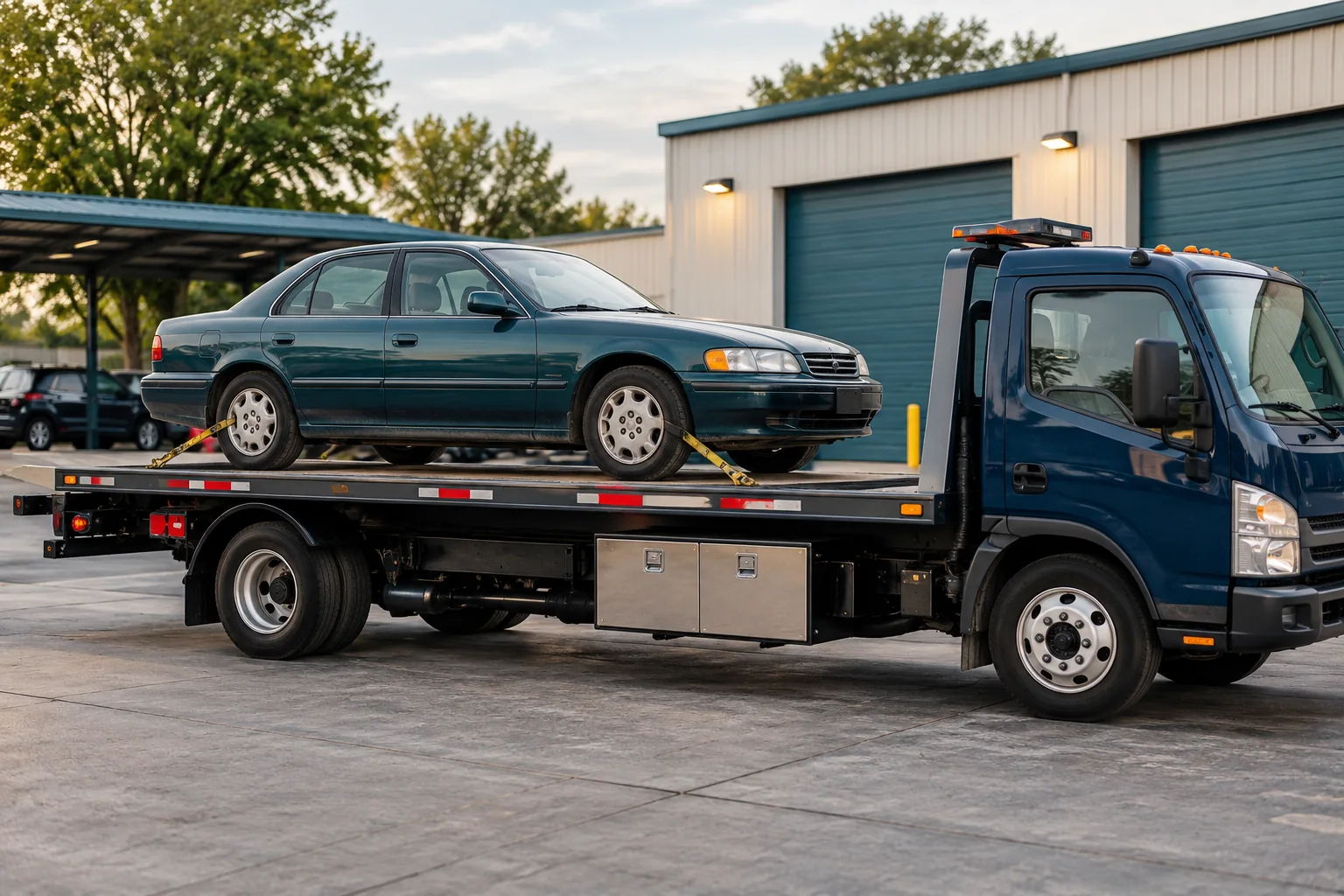
Replace one label with an accurate condition
Non-running car transport begins with a description more useful than inoperable. A car with a dead starter can behave very differently from one with seized wheels or collision damage. Explain whether the engine starts, whether the car moves under its own power, whether every wheel rolls, whether steering works and whether the brakes work. Each answer helps the provider assess the loading and unloading task. A vehicle can satisfy one of these conditions while failing another.
Describe what you know and identify what has not been checked. If the car has been stored for years, do not assume it rolls because it rolled when parked. If the key is missing, explain that steering or transmission status may be unknown. Ask a qualified local person to assess the condition where necessary. An honest unknown gives the provider a reason to investigate. A guessed answer can lead to unsuitable equipment being sent and a failed collection at the owner's expense.
The vehicle fact-sheet guide explains how to put these details into a consistent record. Add photographs showing the whole car, wheels, surrounding space and the route to the loading position. Include the exact address and a contact who can explain access. The goal is an acceptance decision based on the actual vehicle, rather than a routine booking that relies on a driver discovering and solving a substantially different task after arrival.
Explain why it does not move
State the known cause of the problem without diagnosing beyond the evidence. The engine may not start, the transmission may not engage, the battery may be depleted or the car may have collision damage. A workshop's written finding is useful if available. If the cause remains unknown, say so. Avoid describing a vehicle as needing only a battery when that explanation has not been confirmed. The provider needs the current behavior and known limitations more than an optimistic repair prediction.
Separate a reliable start from an occasional start. Tell the carrier if the engine runs only after a jump, stalls immediately, overheats or cannot idle safely. A car that starts once during booking may still require non-running handling at pickup or delivery. Do not ask the driver to keep trying a questionable mechanical system to avoid an equipment charge. Have the provider price and accept the actual condition, including the possibility that the car will not power itself at the destination.
If you can repair the problem before shipment, ask the workshop for a realistic completion date and confirm the result before changing the booking description. A repair appointment does not prove the vehicle will be ready. If the work is unfinished, notify the transport provider before dispatch. The booking-to-delivery guide explains why vehicle facts need to remain accurate through assignment and pickup. A change in readiness can affect the equipment as well as the schedule.
Report wheels, steering and brakes separately
Tell the provider whether all wheels are present, tires hold air and the wheels can rotate. Identify a flat tire, missing wheel, damaged suspension or wheel positioned at an abnormal angle. Send clear photographs rather than trying to decide which equipment will solve the issue. A professional needs to assess how the car can be moved and supported. Do not assume a winch alone makes every vehicle loadable, especially when a wheel cannot turn or structural damage changes the load path.
Describe steering precisely. Does the steering wheel turn? Do the front wheels respond? Is the steering lock engaged because no key is available? A disconnected steering component differs from normal steering that requires more effort with the engine off. Report the observed condition and let the handler determine the practical consequences. If the car cannot be guided along a loading path, the provider needs to know before arriving with equipment intended for a free-rolling, steerable car.
Make the same distinction for braking. Explain whether the service brake works, whether the parking brake can engage and release, and whether the car can be secured in its current location. If any point is unknown, have the provider identify what assessment is needed. Do not release a brake or shift a vehicle on a slope to test it yourself. The owner supplies information and access; the qualified handler should decide how to manage movement safely with the actual equipment and surroundings.
Check manufacturer restrictions before handling
A disabled modern car may have electronic controls that affect whether it can roll. A depleted low-voltage system, missing electronic key or inaccessible display can prevent the normal loading procedure. Locate the correct manual for the exact model and year, and provide it to the carrier. If the vehicle has been modified, explain the modification. A standard instruction may no longer describe the installed transmission, security system or powertrain, so a qualified technician may need to clarify the appropriate handling plan.
Tesla's Model S transporter instructions, for example, distinguish approved transport methods and a limited mode for short repositioning. This illustrates why a car that can be made to roll is not necessarily approved for road towing with its wheels on the ground. Apply the manufacturer's instructions for the vehicle in front of the handler. Do not generalize one electric vehicle's procedure to another model or assume a neutral selection answers every transport question.
Leave technical recovery work to an appropriate professional. Do not bypass an electronic parking system, improvise a pulling point or alter a high-voltage system to make a booking easier. Tell the carrier if a needed tow eye, key or other manufacturer-specified item is missing. The provider can then assess whether another approved approach is available. The complex vehicle systems guide explains why these operational details belong in the initial plan, even when the car is not unusually valuable.
Distinguish routine transport from recovery
A car parked on a level workshop forecourt presents a different task from a car below ground in a low garage, lodged off a road or sitting in a damaged building. Describe the location and path to the loading area fully. Ordinary vehicle transport may begin only once the car is recovered to an accessible position. Ask the provider whether recovery is included, excluded or available through another company. Do not assume a routine car-hauling truck can perform every preliminary extraction.
Photograph the approach from the road, any gates, height restrictions, turns and the space around the car. Measure a restriction when the provider requests it, rather than guessing from memory. Tell it whether other vehicles or stored items must be moved first. A truck's ability to reach the property does not prove that its equipment can reach the disabled car. The access planning guide helps identify these address-level constraints before assignment.
If a local recovery company must move the car to a suitable collection point, coordinate both providers. Confirm when the first company releases it, where it will be held and who is responsible during the gap. Avoid leaving a disabled vehicle in an unsecured or prohibited location while waiting for the long-distance carrier. A preliminary transfer needs its own condition record and accepted handoff. The main shipment should start only when the receiving carrier has confirmed that the new position is appropriate for its equipment.
Disclose damage, leaks and hazardous conditions
Tell the provider about collision damage, fire exposure, flooding, fluid leaks and unstable components. These facts can affect acceptance, equipment and the type of specialist needed. A vehicle sold as salvage is not a complete condition description. Two salvage vehicles can have very different handling concerns. Supply the available damage report and current photographs, including areas that are difficult to see in a sale listing. Let the provider ask for additional assessment rather than minimizing an issue to secure a routine booking.
For an electric or hybrid vehicle, identify the powertrain and any known battery damage or warning. A damaged traction battery requires specialist evaluation and cannot be treated as an ordinary dead starter battery. If there is an active emergency such as smoke or fire, use the appropriate emergency response process rather than proceeding with a transport appointment. For a stable vehicle with a known concern, have the appropriate qualified professional establish what transport is permissible and communicate that conclusion to the provider.
Ask who must secure loose parts or address a leak before collection. A handler should not discover an unsecured hood or damaged panel when the car is already being moved. If parts are removed, create an accepted inventory and clarify how they will travel. The items inside a shipped car guide explains why permission and coverage need separate answers. Loose vehicle parts are still cargo that requires an agreed plan, rather than an assumed entitlement to fill the cabin.
Confirm equipment at both ends
Ask the provider to explain how it will load and unload the car given the disclosed condition. The answer should identify whether the assigned equipment and receiving location can support the task. A winch may assist one stage but not solve the final positioning requirement at a garage or workshop. Avoid a plan that gets the vehicle onto a trailer without establishing how it comes off and where it will remain safely once the transporter has departed.
If a broker arranges the shipment, confirm that the vehicle's condition and access information reach the actual carrier before pickup. FMCSA's automobile transporter advisory distinguishes the arranging and transporting roles. Use the broker guide to ask who reviewed the non-running details and accepted the job. A note in an initial inquiry is insufficient if the dispatched driver receives a booking describing an ordinary running car.
Get material requirements into the written scope. Identify any separate loading charge, local assistance, storage arrangement or limitation on the unloading location. If the provider proposes a different method after reviewing the photographs, ask what changed and obtain an updated confirmation. The handling guide explains why equipment suitability depends on the vehicle and loading path together. A transparent revision before dispatch is easier to manage than an unexpected condition dispute beside an arriving truck.
Coordinate auctions, shops and storage yards
A non-running car often leaves a business location with release procedures. Confirm that the sale is complete, paperwork is ready, storage charges are addressed and the facility permits collection during the pickup window. Ask who can provide keys and whether staff assistance or equipment is included. A listing that says loading available may refer to a specific appointment, machine or limitation. Have the transport provider verify compatibility with that facility's actual arrangement before scheduling the journey.
If a repair shop releases the car, identify whether it will be assembled enough for the accepted movement. A car that arrived at the shop on four wheels may later have its suspension removed or drivetrain disassembled. Obtain current photographs and a fresh condition description close to collection. Do not send the original breakdown description if the physical state has changed. The business handoff guide offers useful principles for named release contacts, vehicle identification and documentation.
At a storage yard, ask about access appointments and the deadline before further charges accrue. Align the pickup window with the facility's release hours and clarify what happens if the truck is delayed. If the car cannot be collected as planned, find out who must authorize continued holding. Keep the facility and provider informed through one clear contact chain. Otherwise the owner may assume the carrier is arranging release while the yard is waiting for instructions that only the owner can provide.
Prepare a destination that accepts the condition
Confirm that the receiver knows the car is non-running and can accept it in its disclosed state. A workshop may need an appointment, a specific unloading position or staff available to move the vehicle after delivery. A private garage may have a slope or threshold that requires another arrangement. Describe these conditions to the carrier before departure. Do not count on the driver to push a disabled car uphill or perform an unplanned local recovery after unloading.
Send the receiver the condition report, accepted operating information and inventory. Identify who will inspect, sign and pay any agreed balance. If you cannot attend, make sure the representative has the required authorization and understands the limits of the task. The document guide helps distinguish transport acceptance from a mechanical inspection. The receiving person can record what arrived without certifying that an already disabled engine or braking system works correctly.
Compare the vehicle with its origin record and document any new visible concern promptly under the provider's procedure. Check accepted parts, keys and accessories as well as the body. If a technical issue needs investigation, have a qualified person assess it before attempting normal operation. Non-running car transport is complete when the vehicle reaches an agreed, workable destination with an accurate handoff record. Precise disclosure at the beginning makes that outcome more likely because the provider can plan for the actual task at both ends.
Sources and further reading
Dates and the scope of individual rules are explained in the guide. Use the linked authority or operator to confirm requirements for your shipment.