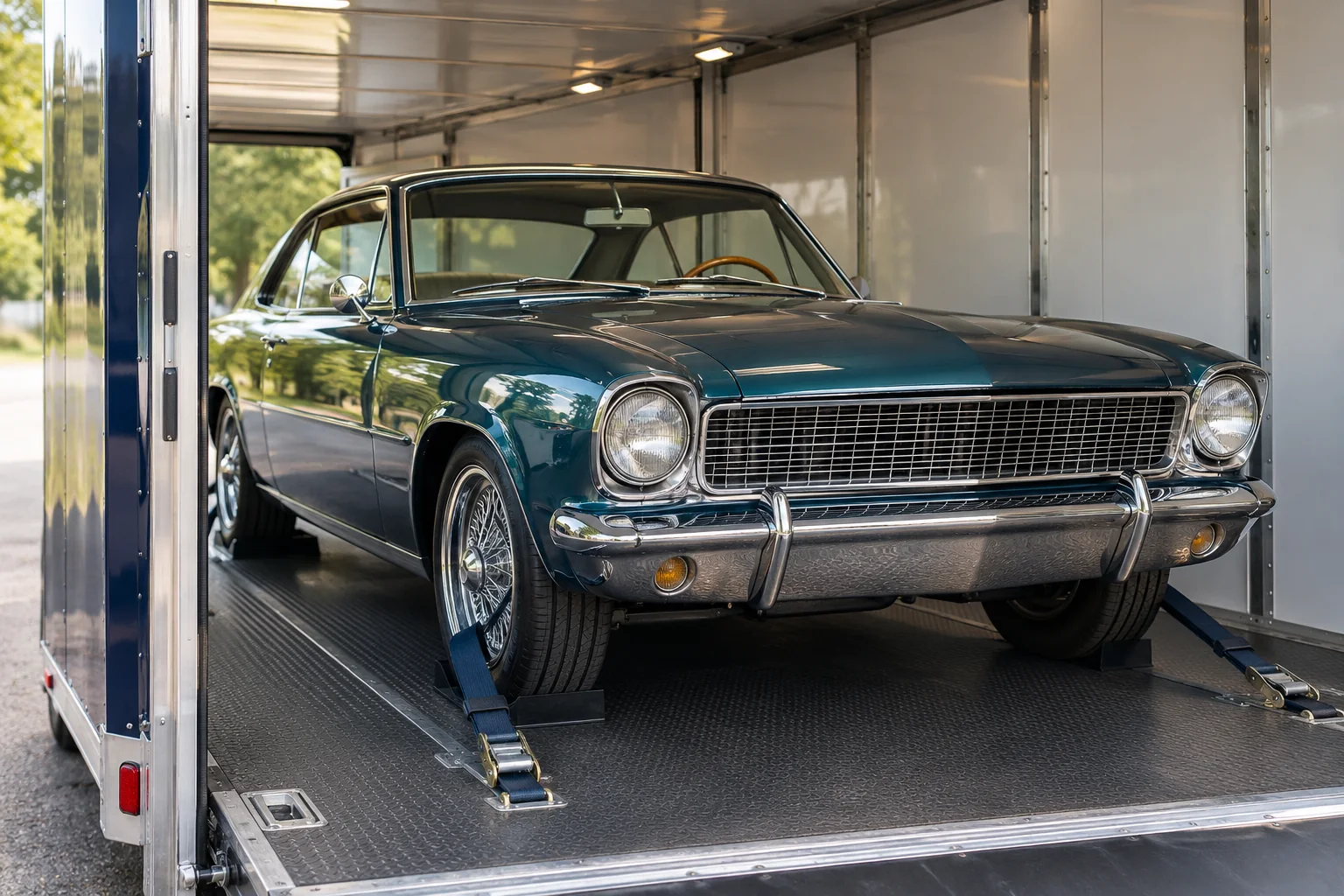
Describe the car as an individual vehicle
Classic car transport starts with the particular car, its condition and the owner's preservation goals. A restored touring car, a largely original survivor and a project shell can share a model year while needing very different handling. Explain what the vehicle is now, rather than relying on a collector category or market value to communicate its needs. Tell the provider which surfaces are delicate, whether the car operates reliably and what work has recently been completed.
Create a concise description that includes make, model, year, actual dimensions, modifications and operating status. Mention lowered suspension, a removable hardtop, unusual bodywork or wheels that differ from the original specification. If the car has been stored, confirm its present condition before booking. A vehicle that last ran well two years ago has not yet been shown to be ready for an ordinary loading appointment. Arrange any needed mechanical assessment separately from the transporter's arrival.
A useful preparation record gives the handling team decisions they can act on. Replace a general request to be careful with precise information, such as fragile trim on a specific panel or a starting procedure that differs from a modern car. The vehicle fact-sheet guide provides a structure for collecting those details. This prevents the operational information from being scattered across a sale listing, old workshop invoice and a long message that the assigned driver may never see.
Record existing condition in useful detail
Make the car clean enough for inspection without using unfamiliar products or aggressive cleaning methods just before shipment. Photograph it in even light, including all sides, visible roof areas, bumpers, glass, wheels and interior. Take broader views that establish location as well as close views of existing chips or cracks. A close photograph of a blemish is more useful when another image shows where that blemish sits on the car. Keep the original files and their dates.
Document delicate finishes and recent work specifically. Fresh paint, repaired trim or a recently fitted interior can involve handling limits that should come from the restorer or relevant specialist. Ask that person for the practical restrictions and pass them to the carrier before equipment is assigned. Avoid assuming that a surface is ready for every protective material merely because it appears dry. A cover, adhesive label or contact point that is acceptable on one finish may be inappropriate on another.
Use the pickup condition report as a shared record rather than relying only on private photographs. Review the description with the receiving driver and make sure visible preexisting damage is noted accurately. If an auction house, seller or workshop releases the car, confirm who performs the inspection and sends you a copy. The document handoff guide explains how a signed condition record fits alongside the transport contract and receipt. Each document answers a different question.
Write operating instructions for the handler
A classic car may have a choke, manual fuel control, battery cutoff, separate ignition switch or an unfamiliar gear pattern. Provide a short instruction sheet that identifies the controls and the correct sequence without unnecessary history. Include a photograph or diagram if a hidden control is difficult to locate, and explain any limit on idling or restarting. Have a knowledgeable person verify the instructions. A driver should not have to discover an unusual starting system by trial and error.
Hagerty's domestic transport guidance recommends written starting and running instructions, including fuel or ignition cutoff locations. Use that principle to prepare your own vehicle-specific note. Describe what to do if the normal procedure does not work, such as stopping and calling the named contact. Avoid instructions that encourage repeated cranking or improvising a repair. A clear stopping point protects the car and gives the handler a practical route to an informed answer.
Keep instructions consistent with the car's actual configuration. A replacement ignition system, electric fuel pump or modern transmission may make an original manual incomplete. If there is no reliable operating procedure, disclose that fact and arrange an appropriate non-running movement. The non-running vehicle guide explains why the ability to roll, steer and brake must be described independently from engine operation. A professional can then assess the equipment needed without receiving an unexpectedly immovable car.
Match equipment to the preservation needs
Discuss the protection you want and the physical limits of the vehicle before choosing a transport type. Enclosed transport can reduce direct exposure during the road journey, but the equipment still needs a suitable loading method and restraint arrangement. Ask whether the car's clearance, width and operating condition fit the assigned trailer. An enclosed body around an unsuitable loading setup does not resolve a low front valance or an unusual wheel configuration.
If comparing open transport, consider the vehicle's finish, weather exposure and intended use honestly. An owner shipping a regularly driven classic may make a different choice from an owner moving a newly restored exhibition vehicle. There is no need to describe either choice as universally correct. Explain the risk you want to reduce and ask the provider how its actual equipment addresses that risk. The answer should concern the booked service rather than a stock photograph of another trailer.
Ask about loading, unloading and any planned transfer between equipment. If the route includes holding at a facility, identify the storage environment and the party taking custody. If you require a specific handling method, have the provider confirm it in the written scope. A verbal statement that a company moves collector cars does not establish what will happen to this car. The classic car cost guide connects these equipment and handling decisions to a realistic transport budget.
Explain vulnerable parts and removable accessories
Walk around the car with the release contact and identify parts that could be overlooked. A loose badge, delicate antenna, poorly secured hubcap or removable mirror needs a deliberate decision before pickup. Ask a qualified person whether it should remain fitted, be secured appropriately or be removed and packed separately. Tell the carrier what will travel with the car and obtain its acceptance. A loose part on the passenger seat is easy to miss during a hurried handoff.
Do not add a car cover without discussing it with the provider. The carrier may have its own protective process, and a cover can interact with the finish or move during handling. Ask who supplies any protective material, where it is used and whether the restorer has restrictions. The same caution applies to adhesive films, tape and improvised padding. The owner's role is to communicate the car's limitations and obtain a coordinated plan, rather than inventing a new protection method immediately before collection.
For a convertible or vehicle with unusual weather sealing, describe known limitations. A fragile soft top, removable side curtain or existing water leak can affect the movement and any temporary storage choice. Make sure openings are secured according to the car's proper procedure. If professional work is needed, arrange it before pickup. A transporter should not discover that a top cannot be latched after accepting the car. Clear disclosure allows the provider to confirm whether the proposed journey is appropriate.
Keep preservation and running readiness distinct
A preserved historic vehicle may intentionally be kept in a condition that is unsuitable for running. The National Park Service's historic vehicle conservation guidance distinguishes museum preservation treatment from keeping a vehicle operable. Do not apply a museum storage procedure to a running transport shipment without expert direction. Instead, tell the carrier whether the vehicle has been conserved, drained, immobilized or otherwise prepared for display so it can assess the actual movement required.
For an operating car, arrange any needed mechanical preparation with a person who understands it. Check for leaks, brake concerns, tire deterioration or a weak battery that could interfere with movement. Disclose unresolved issues rather than hiding them behind a description such as excellent condition, which may refer only to appearance. If the car cannot be operated safely, discuss a suitable handling arrangement. Transport is a movement service, and a driver should not be expected to carry out restoration work to make an undisclosed project loadable.
Provide the manufacturer's instructions where relevant and explain later changes. A car with a modernized drivetrain or electrical conversion needs information about the installed system, not merely the original model. For a vehicle with a traction battery or other unusual power source, make that fact explicit. The broader vehicle transport guide explains why powertrain and dimension details belong in the initial acceptance discussion. A classic body does not tell the handler everything about the technology underneath it.
Clarify responsibility and valuation evidence
Identify the business arranging the journey and the carrier that will physically take custody. FMCSA's automobile transporter advisory explains the difference between brokers and transporters and recommends checking registration. Use the provider verification guide to organize those checks. A collector-focused name or polished image gallery does not replace a clear legal identity, service scope and understanding of which company is responsible for the transport.
Ask for the actual coverage terms that apply to the car and route. Discuss the proposed value, supporting appraisal or purchase evidence, deductible, exclusions and claim procedure. Do not assume that a high stated cargo limit means every type of loss to your individual car is covered at its full collector value. Your own insurer can explain whether your policy applies during transit and whether any conditions affect the chosen arrangement. Keep that answer separate from the carrier's description of its liability.
Collect valuation evidence before departure. A recent appraisal, restoration invoice or documented purchase can be useful, but ask the relevant insurer or provider which evidence it accepts. The objective is an agreed understanding of the vehicle and the protection purchased. Keep receipts for accepted accessories as well if they matter to the arrangement. Avoid carrying original collectible paperwork inside the car simply because it relates to the vehicle; decide how irreplaceable records will travel securely and remain accessible to you.
Plan the release and receiving locations
A classic may leave an auction, restoration shop, private garage or storage building. Each location has its own hours and release rules. Confirm who can provide keys, sign the condition record and authorize loading. If payment or sale documentation must be complete first, separate that issue from the transport booking. A carrier arriving before the seller can legally release the vehicle creates delay and may generate a return visit. The purchase delivery guide offers useful questions for coordinating release.
Inspect access at both ends. A steep driveway, narrow lane or low tree canopy can prevent the booked transporter from reaching the garage. Arrange a legal meeting point with enough room and consider how the car will move between it and the property. If the car should not be driven that distance, discuss another suitable transfer rather than improvising after arrival. Access planning is especially important when a rare vehicle cannot simply be parked on a public street while the owner decides what to do.
Make the receiver part of the preservation plan. Provide the origin photographs, operating sheet and contact details before delivery. The person should know which parts are delicate and what to inspect. If you are sending the car directly to a show or workshop, confirm the recipient's hours and authority to accept it. A tight event date deserves an explicit conversation about timing and alternatives. Do not build the entire event plan around an assumed exact arrival that the carrier has not committed to in writing.
Inspect before closing the movement
At delivery, compare the vehicle with the origin condition record before completing the handoff. Look carefully at the identified vulnerable parts as well as ordinary panels, glass, wheels and interior. Check accepted accessories and documents against the inventory. Record a new concern using the provider's required process and preserve photographs showing both detail and location. If lighting or weather limits inspection, follow the contract's instructions and document the limitation promptly rather than assuming a later report will be treated in the same way.
If a handling issue suggests a mechanical concern, have an appropriate specialist assess it before routine driving. An unusual noise or warning deserves investigation, but do not assign a cause without evidence. Keep the transport record, photographs, invoices and relevant communications together so the responsible parties can evaluate the concern. Ask about the claims route and deadlines directly. A calm, precise record is more useful than a broad assertion that the car was perfect when it left.
Once the move is complete, retain the operating sheet and update it with anything the handler found unclear. Add the condition photographs to the vehicle's organized records if they help document its current state. The next movement may involve another owner, venue or carrier, so keep instructions factual and specific. Classic car transport is easiest to manage when preservation goals become practical handling information: a known condition, an understandable operating procedure, accepted equipment and an informed receiver ready to examine the car when it arrives.
Sources and further reading
Dates and the scope of individual rules are explained in the guide. Use the linked authority or operator to confirm requirements for your shipment.