Define the needs behind the vehicle category
Luxury car transport is a handling decision about a particular vehicle. A long-wheelbase sedan, low sports coupe and large electric SUV may all carry a high purchase price, yet require different equipment and operating instructions. Begin with the physical details and systems that affect movement. State the exact model, year, trim, powertrain and modifications, then explain the finish or components you want protected. A broad description such as premium vehicle tells a dispatcher much less than a precise note about clearance and operation.
Separate the car's value from its loading requirements. An expensive SUV may fit ordinary transport geometry, while a less valuable modified coupe may need a specialized approach. The equipment discussion should follow the vehicle's measurements and manufacturer guidance. The coverage discussion should follow its documented value and the terms offered. Keeping both subjects clear prevents a large cargo limit from being mistaken for proof that the assigned trailer can physically handle the car without contacting its underside.
Build a written fact sheet before booking and keep it available for the actual carrier. Include contact details for a knowledgeable owner, dealer or technician if the vehicle has an unusual system. The transport fact-sheet guide explains how accurate information improves the service scope. Give the provider enough detail to make an acceptance decision while there is still time to choose suitable equipment, rather than asking the arriving driver to solve a previously undisclosed problem.
Measure clearance as well as dimensions
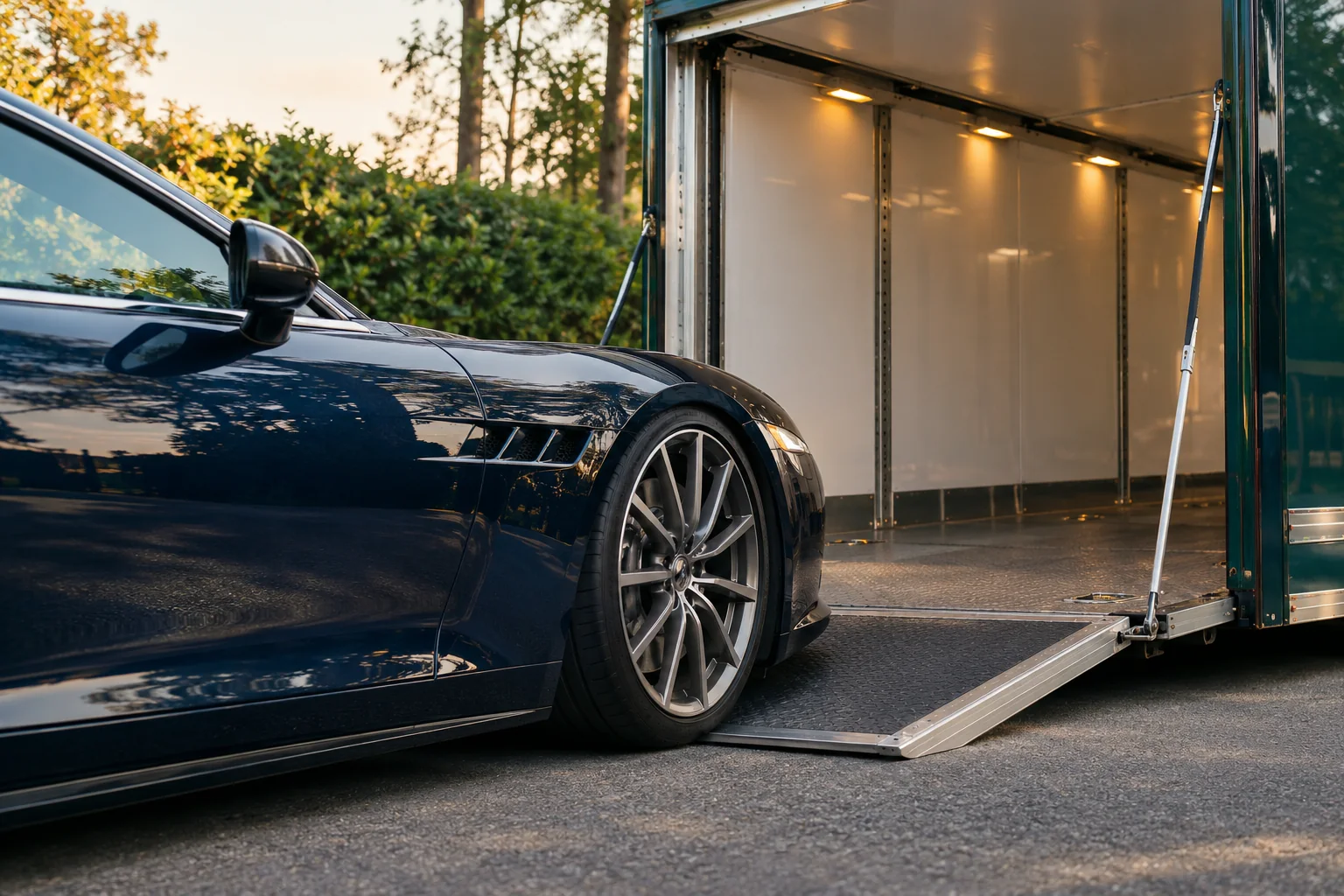
Overall length, width and height help identify equipment fit, but a low car also requires attention to its approach and departure geometry. The distance between an axle and a front splitter can matter alongside the minimum clearance underneath the car. Provide clear photographs showing these areas and describe any aftermarket additions. Ask the carrier which measurements it needs to review the loading method. Do not rely solely on a specification for the standard version of a car with altered suspension or bodywork.
If the vehicle has an adjustable lift or air suspension, explain the system and provide the correct instructions. A temporary raised position may have limits, and it should not be treated as a universal solution to every ramp angle. Ask who is responsible for setting the vehicle and how the position will be maintained during the relevant handling stage. The responsible professional should confirm that the proposed method complies with the manufacturer's guidance for the exact vehicle, rather than improvising from experience with a different model.
Discuss access before deciding that suitable trailer equipment solves the whole problem. A steep garage exit or sharp driveway transition may create contact before the car ever reaches the transporter. The door-to-door planning guide helps evaluate a legal alternative meeting point. If the car should not be driven from the garage to that location, arrange a suitable preliminary transfer. Each stage needs a workable path, including the final movement from the unloading area into the destination property.
Supply the correct manufacturer instructions
Modern vehicles can have electronic parking brakes, automatic park engagement, transport modes, air suspension and key-dependent systems. Locate the manual for the exact model and model year, and give the carrier the relevant transport or recovery section. A dealer may help confirm the correct document when specifications differ by production date or market. Explain modifications that could make the factory instructions incomplete. A screenshot from another owner's forum should not replace the source that applies to the car being handled.
For an example of why this matters, Tesla's Model S transporter instructions address keeping the wheels from spinning during transport and distinguish a short repositioning mode from normal travel. The lesson is to supply precise instructions, not to apply this model's procedure to every electric car. Different vehicles and revisions can have different requirements. Ask the handler to review the applicable document before accepting custody and identify any point that needs manufacturer clarification.
Do not perform a technical procedure simply to make the car appear ready if you do not understand its purpose. Ask the manufacturer, dealer or qualified technician who should complete it and when. The preparation record should identify any setting that must be restored after unloading. If an electronic function is already unreliable, disclose it before booking. A carrier needs to know whether the vehicle can actually enter the required mode, not merely that a button with that name exists in its menu.
Choose protection through specific questions
Enclosed transport can reduce direct exposure during the road journey, but ask what the particular service includes. Discuss trailer construction, loading method, transfers and any holding facility. If you want a dedicated movement, establish whether the agreement provides exclusive use of equipment and whether another business may perform part of the journey. The dedicated transport guide explains why privacy, exclusivity and vehicle-only service should each be defined rather than assumed from one marketing term.
A vehicle may be handled outside while entering or leaving an enclosed trailer. Ask what protection applies during those moments and what happens if weather or access prevents immediate loading. If a fresh finish, unusual wrap or delicate convertible roof has special limits, obtain advice from the installer or relevant specialist and share it. A carrier's usual protective process may need review when it involves contact with a surface that has different care instructions from ordinary factory paint.
Compare protection choices against the actual trip and car rather than using price alone. Covered transport terminology can mean different arrangements, so identify what surrounds the vehicle and what handling is performed. Ask for the promised method in the written scope. If a proposed substitution changes the protection or loading plan, review it before release. An agreed requirement is easier to evaluate when it describes equipment and actions rather than an undefined promise of white-glove treatment.
Protect keys, access and personal information
A transporter needs a reliable way to enter and operate the car. Establish which key, card or fob the handler requires, and confirm that it works before pickup. Do not assume a phone-based key tied to your device will work after you leave. Ask the manufacturer about any accepted restricted-access feature and its limitations for transport. A mode designed for a valet may disable a function the handler needs, so compatibility should be checked rather than inferred from the feature's name.
Remove unnecessary house keys, garage remotes, toll devices and personal records. Review saved navigation locations and accounts if handing the car to another party creates an access concern. Make changes you understand and that do not interfere with the agreed operating procedure. If a security or tracking feature will remain active, tell the provider about any relevant effect, such as an alarm triggered by movement. Do not use remote commands to change the vehicle's state while someone may be handling it.
Keep a spare key separately when available and agree who can authorize a response if the primary key fails. Provide the operating instructions through the provider's accepted process without sharing unnecessary account passwords. If the vehicle needs an online account intervention, clarify that with the manufacturer and carrier in advance. The goal is controlled access that remains practical at pickup, any authorized transfer and delivery. A secure plan should not leave a driver unable to release an electronic parking system at the far end.
Document finish, wheels and interior
Create a clear condition record in good light before the car leaves. Photograph full panels and detailed areas, including wheel faces, visible tire condition, glass, trim and the interior. Identify existing scratches, chips and curb marks with enough context to locate them later. Capture any warning messages and the odometer. Keep original files accessible from the destination. A photograph of a tiny mark without a wider view can be difficult for another person to interpret during a delivery inspection.
Tell the carrier about paint protection film, ceramic treatments, custom wraps, matte finishes or repaired surfaces. Obtain the installer or manufacturer's care instructions when they affect handling or cleaning. Avoid applying an unfamiliar temporary film or cover just before collection. An added layer can create its own contact or removal problem. Ask what materials the provider uses and who has responsibility for them. The classic car preparation guide offers a related approach to translating delicate finishes into practical instructions.
Remove personal items unless the provider expressly accepts a documented inventory. Accepted belongings and vehicle coverage are separate subjects, as the personal items guide explains. List any agreed accessory, such as an accepted charging cable, and record where it is located. Keep valuables, identity documents and irreplaceable vehicle records with you. A luxury car's storage compartments can conceal forgotten items, so check them deliberately before the pickup inspection rather than relying on a quick look at the seats.
Review value and coverage with evidence
Ask for the coverage terms that apply to the actual carrier, vehicle and route. Identify the proposed valuation, deductible, exclusions, limits and claim procedure. A general certificate or advertised limit does not answer every question about an individual loss. Ask whether the coverage treats the car's agreed value, market value or another basis and which evidence is accepted. If the vehicle is recently purchased, customized or collectible, explain that situation before assuming an ordinary description captures its value accurately.
Keep the purchase agreement, relevant appraisal and documented modifications available. Your own insurer can explain whether its policy responds during transport and whether any conditions apply. Ask the two parties precise questions rather than assuming their protections overlap without gaps. If there is a holding facility or a preliminary local transfer, include those stages in the discussion. A route that looks like one journey to the owner may involve several custodians and contracts with different responsibilities.
Verify the businesses as well as the paperwork. FMCSA's automobile transporter advisory explains the broker and carrier distinction and recommends registration checks. The verification guide helps connect the legal name, role and transport records. If a broker arranges the shipment, identify the assigned carrier and review its relevant information before the vehicle is released. A reputation for premium bookings does not identify the company that actually takes custody.
Coordinate the dealer or garage handoff
When a dealer, storage facility or service center releases the car, name a specific person responsible for the handoff. Confirm opening hours, release authorization and the point at which payment or service work must be complete. Send that person the agreed handling requirements and ask how they will reach the driver. If a technician must set a transport function, schedule it around the actual pickup window. A transport booking should not depend on a specialist being available without a prior arrangement.
Ask the releasing party to send the completed condition report and photographs promptly. If you have not yet seen a newly purchased car, separate your purchase inspection from the carrier's transport inspection. The driver records visible condition for the movement; that process does not necessarily assess mechanical condition, specification or whether the sale matches your expectations. The dealer delivery guide explains how to coordinate these distinct responsibilities without asking a transport driver to become a buyer's inspector.
At a private home, ensure the correct owner or authorized representative can attend. Review gate access, parking restrictions and the legal meeting point before the truck arrives. If the origin or destination involves a secured building, do not assume security staff will sign for the car. Identify who has authority to receive it and who can inspect the delicate areas documented at pickup. A carefully chosen carrier still needs an informed person available to complete the final transfer.
Receive with time for inspection
Plan delivery so the receiver can examine the car before completing the handoff. Compare panels, wheel faces, trim, glass and the interior with the origin record. Pay particular attention to the low areas and accessories identified in the handling sheet. Record a new concern on the required documentation and follow the provider's notification process promptly. Keep photographs with enough surrounding detail to show location. If the conditions limit inspection, document that fact and follow the applicable contractual procedure.
Confirm that any special mode or setting is restored by the appropriate person before normal use. If the car displays a new warning or behaves unusually, seek qualified assistance rather than repeatedly testing an unfamiliar system. Do not assume the cause without evidence. Keep the transport record and the relevant manual available for assessment. A short, documented technical review is preferable to turning a possible handling concern into a second problem during the first drive after unloading.
Close the financial record against the written service scope and retain receipts, condition reports and communications. If an added charge is unexplained, ask which agreed term and event created it. Luxury car transport is manageable when every distinctive feature produces a corresponding instruction or decision: enough clearance, an accepted loading method, usable controls, documented value and a prepared receiver. Those details give the owner a concrete way to evaluate the service and give the handling team the information needed to move the exact car presented.
Sources and further reading
Dates and the scope of individual rules are explained in the guide. Use the linked authority or operator to confirm requirements for your shipment.