Begin with the actual service
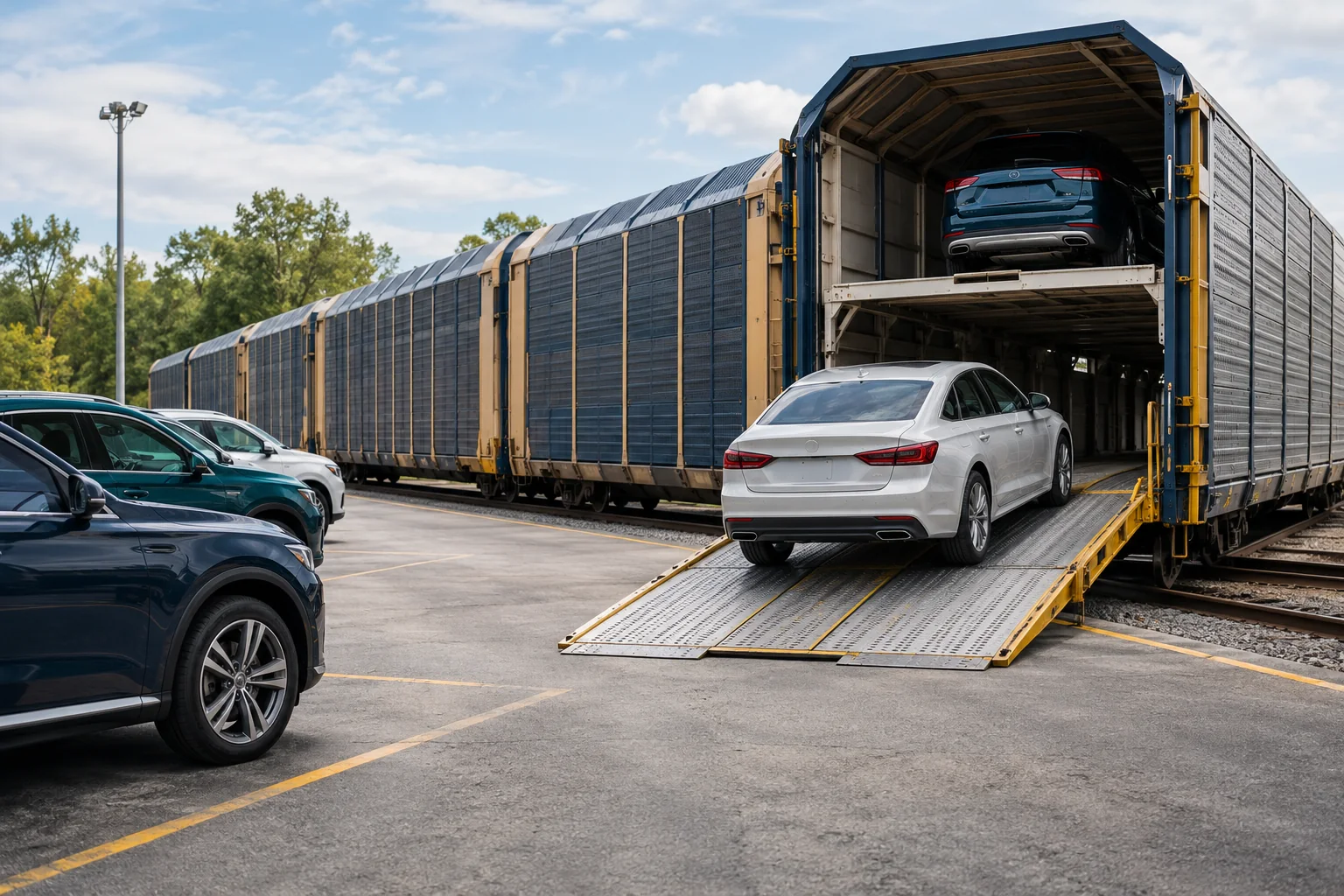
Shipping a car by train can describe very different arrangements. A passenger service carrying a traveler and a vehicle is different from a commercial railway moving factory inventory. Before comparing prices or planning dates, identify the operator and ask whether it accepts an individual owner's vehicle on the requested route. A rail map showing tracks between two cities does not establish a consumer vehicle service. Neither does a photograph of new cars traveling in an enclosed railcar.
Amtrak's Auto Train operates nonstop between Lorton, Virginia, and Sanford, Florida, according to its vehicle and check-in requirements. That specific corridor can fit some journeys between the Washington area and central Florida, including seasonal travel. It does not create a network of car-shipping stops along the East Coast or a nationwide service. Start with those actual terminals, then calculate how far you must drive before and after the train portion.
For a car traveling without its owner between other locations, investigate the actual commercial options rather than assuming an ordinary passenger train can accept it. The auto transport workflow explains conventional hauled shipping, which may fit a different origin and destination more directly. The right comparison uses the owner's real addresses, travel needs and receiving arrangements. Rail can be a useful component when the available service fits, but the existence of rail infrastructure alone is not a booking option.
Separate passenger travel from freight
Auto Train is a passenger journey with an accompanying vehicle arrangement. Review Amtrak's current booking conditions to establish the people and vehicles traveling together. Do not use an Auto Train itinerary as if it were an unattended car-only freight contract. The traveler must plan the passenger portion, the vehicle check-in and the terminal collection as one trip. If your goal is to fly ahead while someone else receives the car, ask whether a road transport service better matches that requirement.
Commercial automotive rail serves another market. For example, CSX's automotive service page describes its distribution business and explicitly states that it does not ship personally owned automobiles. This illustrates why seeing a railway carry cars does not mean that railway accepts a single private car from a consumer. Other logistics arrangements should be checked on their own terms, with the actual contracting provider explaining acceptance, terminals, road connections and responsibility.
If an intermediary advertises a rail-based movement for an individual vehicle, ask for a complete description. Which company accepts custody? Is rail actually part of the purchased journey? Where does the car transfer to a truck? Who issues the transport document, and which terms govern each stage? Apply the same role checks used when understanding car shipping companies. A broad claim about rail access is too vague to establish the service you will receive.
Calculate the drive to each terminal
Treat Lorton and Sanford as real addresses, rather than abbreviations for Washington and Orlando. Map the drive from your starting point, the likely traffic conditions and the time needed to find the vehicle check-in entrance. Build in a margin appropriate to your route. A long approach drive on departure day can undo the convenience of avoiding part of an interstate journey if one traffic delay puts you past the acceptance cutoff.
At the other end, calculate the remaining drive to the place where you are staying. A passenger rail arrival is not a delivery appointment at your home. Include the unloading period and the possibility that you will want a meal, fuel stop or rest before continuing. If your final destination is far from central Florida, compare the combined drive and rail itinerary with a direct road shipment. The long-distance planning guide provides a framework for evaluating the full travel day rather than just one segment.
For travelers with limited driving endurance, divide the approach into manageable stages and consider arriving near the departure terminal the previous day. Check hotel parking rules if you carry luggage or use a roof accessory. Keep the terminal appointment independent of a tight checkout or another transport connection. The benefit of a train journey depends partly on making the road portions workable, particularly when a driver is traveling alone or with children, pets or mobility requirements.
Check the exact vehicle configuration
Vehicle eligibility depends on the operator's published requirements and the exact configuration being presented. Measure the car with accessories that will remain attached. Confirm its length, width, height and ground clearance using the current Amtrak guidance. Include mirrors and racks where the operator requires them. A booking entered under a familiar model name may still need special consideration if the vehicle has aftermarket equipment, altered suspension or an unusually long body configuration.
Amtrak distinguishes standard, extended and certain specialized vehicles, and its published page also identifies prohibited configurations. Read the current rules before paying for the journey. Do not infer acceptance from a similar-looking vehicle in a photograph. If the car is near a limit or has an unusual door arrangement, describe it directly to Amtrak and obtain the appropriate booking advice. An oversized vehicle may involve special arrangements, and acceptance is not something a traveler should discover for the first time in the terminal queue.
Motorcycles and other special vehicles have their own requirements, so do not apply a passenger car's limits to them. Ask about the particular vehicle and its attachments. If a disability adaptation or mobility device changes dimensions, discuss that configuration during booking as well as any passenger assistance needed. The broader vehicle type guide explains why transport planning starts with actual measurements and operating characteristics rather than a category such as SUV, sports car or accessible van.
Read the check-in rule as a deadline
Vehicle check-in is a separate process from boarding a passenger train without a car. Amtrak publishes different cutoffs for vehicle types and certain services. Consult the live requirements for the booked departure and put the relevant time in your travel plan. Do not substitute the advertised train departure time. The car needs to be checked in within the operator's window so staff can complete the loading operation before passengers and vehicles travel.
Prepare the booking details before reaching the entrance. Keep identification and travel documents accessible rather than buried in a packed trunk. If several adults are traveling, agree who manages the passenger bags while the driver handles vehicle check-in. Follow staff directions about where to park and when to hand over keys. Photograph the car beforehand in a safe place instead of attempting a lengthy inspection in an active queue or walking around moving terminal equipment.
Ask the operator in advance what happens if a major disruption prevents timely arrival. Understand the ticket's change and cancellation conditions and how to contact the correct support channel. A late road arrival does not automatically entitle a vehicle to be loaded after a published cutoff. Avoid arranging a critical appointment immediately after the expected arrival at the other terminal. The trip has several timed steps, and an honest plan leaves room for normal loading, unloading and traffic uncertainty.
Pack for two separate spaces
Your vehicle and passenger accommodation are separate spaces during the journey. Amtrak advises travelers to take an overnight carry-on because they cannot access the car en route and Auto Train does not provide checked baggage service. Put medicines, essential documents, charging equipment and other overnight necessities in the bag that accompanies you. Check the current passenger baggage rules as well. A fully packed car is not helpful if the item needed during travel remains locked in it.
Organize the car so the driver can see clearly on the approach and staff can handle the vehicle without loose objects interfering. Keep valuables with you. Amtrak's published requirements state that personal effects left in the vehicle remain the traveler's responsibility. That condition differs from a general assumption that everything inside a transported car is automatically protected. The personal belongings guide explains why acceptance of items and responsibility for loss should always be checked separately.
Follow Amtrak's specific rack rules rather than applying instructions from a truck carrier or another rail operator. A roof-mounted accessory can affect acceptance even when luggage itself fits inside the car. Review the treatment of rear bicycle racks and any associated conditions before departure. If a rack must be removed, do that in a suitable place and confirm how it will be stored. Terminal staff should not be assumed to provide disassembly tools or an improvised solution for an unexpected accessory.
Prepare the car for another driver
A vehicle handler needs to operate the car briefly during loading and unloading. Make the controls understandable and disclose any unusual starting or parking procedure. Check for a reliable battery, obvious leaks and a condition that would interfere with normal movement. If the car has a known mechanical problem, discuss it with the operator before booking. Do not arrive expecting the train service to provide a recovery operation for an undisclosed non-running vehicle.
Amtrak advises deactivating the car alarm because an alarm sounding during the trip can leave the battery depleted. Review the manual to identify the correct procedure for your vehicle. If the vehicle has an aftermarket immobilizer or an unusual key sequence, ask how to provide the needed information securely. Leave the appropriate functioning key with the handler and retain a spare separately when possible. Avoid attaching unnecessary house keys or personal identifiers to the transport key.
For a low-clearance, modified or older car, confirm suitability directly rather than treating passenger accompaniment as a substitute for vehicle acceptance. A rare car may have operational characteristics that make another method preferable. The classic car guide covers condition records and handling instructions, while enclosed road transport describes questions about a different equipment option. Compare actual methods and responsibilities instead of assuming all enclosed transport works in the same way.
Compare the entire travel budget
A rail itinerary can involve passenger fares, vehicle charges, the chosen accommodation and optional services. Review the actual booking breakdown for the dates and people traveling. Add fuel for both road segments, terminal-area accommodation if needed and any meals or local travel outside the booking. A comparison against a vehicle-only truck shipment should also include how the passengers will reach the destination. Otherwise one option includes personal travel while the other does not.
Consider time as part of the comparison without assigning it a made-up monetary value. Some travelers value spending less time behind the wheel; others need an unattended vehicle movement because they cannot accompany it. Write the requirement in plain terms. If a person must be at work in another state before the train arrives, that conflict matters even if the advertised fare looks appealing. If the itinerary follows the actual corridor and the traveler wants the journey, the same service may be a practical fit.
Use the questions in comparing transport terms when evaluating another provider against the train plan. Check cancellation rules, the treatment of schedule changes and what constitutes a delivery commitment. Do not compare a confirmed passenger itinerary with an unexplained preliminary truck amount as if they had identical terms. The useful result is a budget and timetable for each complete arrangement, including what you will do if a connection or receiving plan changes.
Inspect at the destination terminal
When the car is returned, take time to look it over before leaving the terminal. Compare it with the photographs taken before check-in and note any issue promptly. Amtrak's vehicle page says transit or handling damage must be reported to an authorized representative before leaving the terminal. Read the current procedure and follow it if there is a concern. Driving away first and trying to reconstruct the condition later makes the evidence and reporting process more difficult.
Check that keys and expected accessories are present and that the car is ready for the remaining drive. If an alarm setting was changed, restore it according to the manual once it is appropriate to do so. Allow passengers to organize luggage and navigation before joining busy roads. After a long journey, a few unhurried minutes in a safe designated area can prevent a rushed departure. If a mechanical issue appears, seek the appropriate assistance rather than assuming it is related to the train movement without evidence.
Keep the reservation, vehicle documentation and relevant photographs until the trip is fully closed. For a seasonal return, reassess the vehicle configuration and timetable rather than duplicating the previous booking automatically. Rules, accessories and personal plans can change. The central test remains simple: a real operator must accept the real vehicle on the route you need. Once that is established, passenger rail can be evaluated honestly alongside road transport and other travel choices, without promising a consumer rail network that the operator does not offer.
Sources and further reading
Dates and the scope of individual rules are explained in the guide. Use the linked authority or operator to confirm requirements for your shipment.