Price the service specification first
Enclosed car transport cost cannot be reduced to a reliable universal surcharge. A covered trailer, a specific loading system, a constrained pickup window, and a dedicated journey describe different services. Start by writing the specification you need. Include the vehicle, its dimensions and operating condition, origin and destination access, available handoff dates, and the protection features that matter. A price becomes useful when you can connect it to that specification.
Separate essential protection from optional convenience. You might require a loading method suitable for a low front spoiler while remaining flexible about the pickup date. Another owner might accept ordinary ramp loading but need a narrow receiving appointment. These choices can affect how a provider finds a suitable vehicle position and route. Ask the seller to explain the cost effect of each requested feature rather than bundling every preference under a vague premium label.
This guide does not supply an invented nationwide price range. Instead, it shows what belongs in the budget and what questions make written offers comparable. The enclosed transport planning guide covers the service itself, while the overall shipping budget guide helps track expenses outside the hauling charge. Begin with accurate facts so that a later price revision does not arise from a vehicle detail or access restriction you could have disclosed at the start.
Trailer configuration and usable space
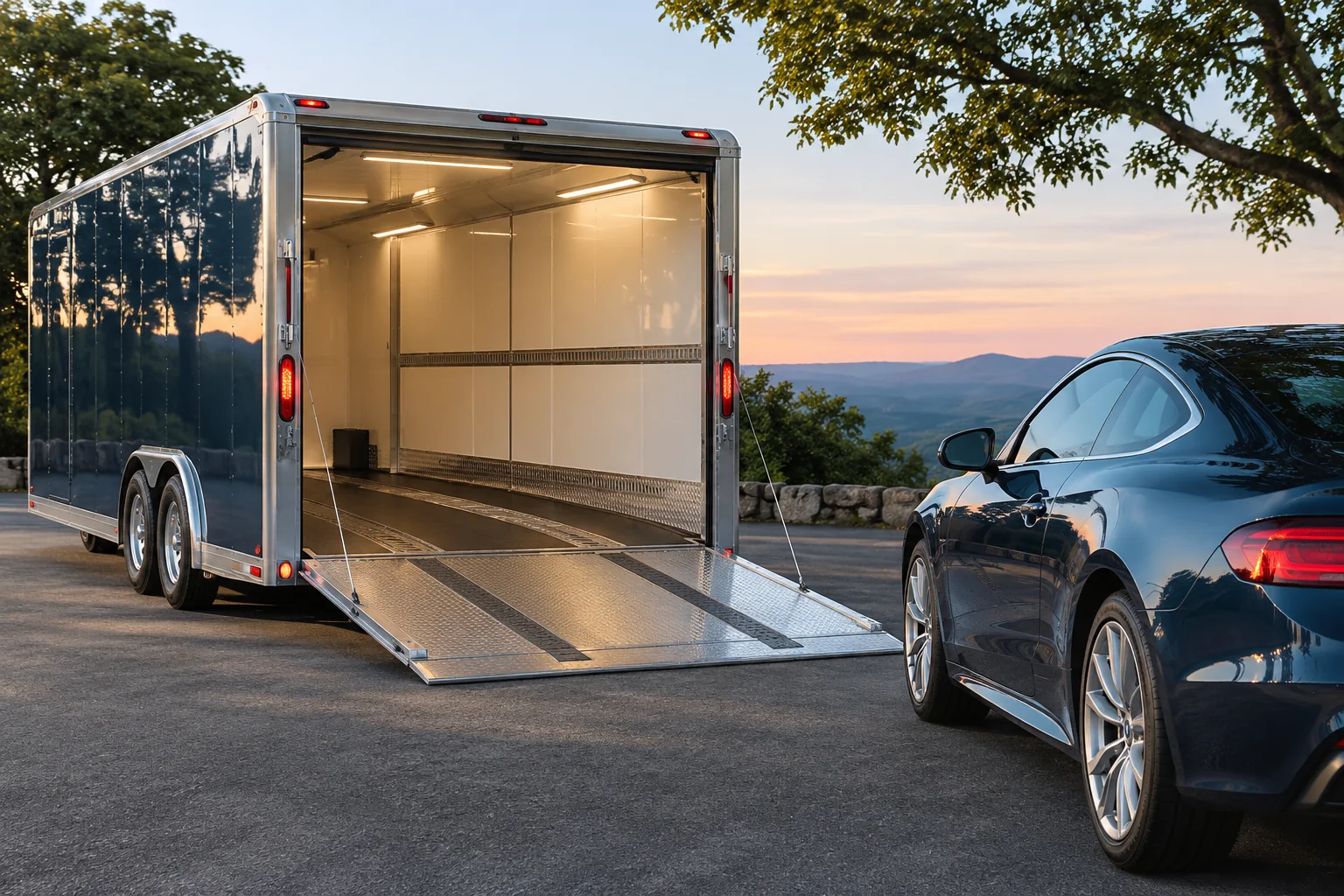
The word enclosed describes a broad protection category. Ask what trailer configuration is contemplated and how your vehicle fits. Interior dimensions, loading positions, door clearance, and the carrier's loading sequence can matter as much as the exterior box. A tall roof attachment, wide mirrors, or modifications may constrain which positions are usable. Give the provider relevant measurements rather than assuming the model name answers every question.
A shared trailer can combine several shipments on a route. A dedicated movement reserves a different amount of equipment and operating time. If a seller offers both, ask which arrangement the stated charge covers. Also ask whether transfers are contemplated and whether a particular configuration is a commitment or an assignment preference. A price for shared capacity should not be compared directly with a price for equipment reserved exclusively for your shipment.
Do not assign an automatic value to trailer features you have not connected to the vehicle. A feature may solve a real exposure or clearance problem, but a descriptive label alone does not explain the benefit. Ask what happens during loading, while the vehicle is secured, and at unloading. The answer should help you decide whether the added service is needed. The covered transport terminology guide can help clarify language that different sellers may use differently. Put the actual configuration in your comparison sheet rather than relying on a single marketing word.
Loading geometry and special handling
Low clearance is a geometry problem before it is a pricing category. Ground clearance, wheelbase, overhang, suspension travel, and ramp transitions can all affect loading. Ask the operating carrier how it evaluates your vehicle and what equipment is proposed. If measurements or photographs are requested, supply them accurately. Do not assume that a car which can enter your garage can use every transporter ramp.
A lift-based loading arrangement, additional setup, or other agreed handling may change the equipment and time required. Request a description of the included procedure and any limitations. If the car needs temporary ride-height adjustment, explain who can operate the system and whether the vehicle retains that setting with the ignition off. A driver should not have to improvise with an unfamiliar control while the vehicle is halfway through a loading sequence.
Distinguish vehicle handling from cargo liability language. A higher policy limit cannot make an unsuitable ramp safe, and an enclosed wall cannot prevent damage caused by an incorrect loading method. Budget for the equipment that addresses the physical constraint first, then examine coverage and valuation separately. The luxury vehicle guide and classic vehicle guide discuss preparing vehicle-specific instructions. Written confirmation of a workable plan is more useful than paying for an undefined promise of extra care.
Route availability and schedule choices
A transporter's route must connect usable pickup and delivery points while accommodating other operational commitments. The distance between your addresses is therefore only one part of the service. Ask whether the offered amount assumes a flexible pickup period, a particular terminal, or a handoff near a major route. An alternative meeting point can change the work, but it also adds your own travel and coordination costs.
Timing requests affect the comparison when they change how capacity is reserved. A broad availability window gives the provider different planning options from a narrow appointment. If you need a particular day, ask what level of commitment the written offer makes and whether the price includes that commitment. Do not pay for an “expedited” label without defining whether it concerns assignment, pickup, transit, or delivery.
Think through the cost of being without the car. Rental transportation, rides, parking, and a second trip to receive delivery can belong in your household budget even when the transporter does not charge them. These are your estimates based on your arrangements, not universal shipping fees. The priority service guide helps distinguish scheduling features. Compare one service with another only after documenting the same date assumptions, and keep any guaranteed terms separate from ordinary estimates. The cheapest hauling line may not produce the lowest complete expense for your situation.
Operating condition and accurate disclosure
An enclosed trailer does not automatically include equipment for a vehicle that cannot move under its own power. Describe whether the engine starts reliably, whether the transmission engages, and whether the car steers, rolls, and brakes. Explain unusual starting procedures, a weak battery, disconnected systems, or a parking brake that behaves unpredictably. These details help the carrier determine whether it can accept and handle the vehicle.
If the car becomes inoperable after booking, contact the provider before pickup. Ask whether the assigned equipment remains suitable and whether the scope or price must change. A documented change is easier to evaluate before a truck arrives than during a blocked loading appointment. If repairs are practical, compare their purpose with the transport requirement, but do not attempt unsafe temporary fixes simply to preserve a particular service description.
Keep loose parts and accessories in the discussion. A vehicle with detached trim, spare wheels, or restoration components is not necessarily covered by the same agreement as a complete running car. Ask what may travel, how it must be secured, and whether it changes the handling or coverage terms. The non-running transport guide addresses the equipment questions in more detail. An accurate condition description protects the usefulness of the initial offer and gives the carrier a fair chance to identify a limitation before either party commits.
Coverage, value, and documentation expenses
For a valuable vehicle, cost planning should include understanding the coverage arrangement. Ask which business carries the relevant policy, what property and operations it covers, and what limits, deductibles, exclusions, or valuation terms affect your shipment. Connect the evidence to the actual operating carrier. A broker's reassuring statement does not by itself explain the carrier's policy or the handling of a claim.
A certificate is not a complete policy. If the vehicle has unusual market value or modifications, describe them and obtain specific guidance from the relevant insurer or agent. Consider asking your own vehicle insurer how transit affects your existing coverage. Any separate product you consider should be evaluated on its actual wording and relationship to other coverage, rather than on a sales phrase such as full protection.
Documentation can take time even when it does not create an invoice. Prepare clear photographs, an accurate condition record, and any records needed to establish the vehicle's identity or value. Store copies where your receiver can access them. Avoid leaving original valuation documents loose inside the car. Verification of the operating business is a separate step: FMCSA explains where to examine interstate authority and filings. Those records help identify the business, but they do not guarantee that every potential loss is covered or establish what your car is worth.
Compare written offers line by line
Create a worksheet with the same vehicle description and service requirements for each provider. Record the total stated charge, any separate arranging fee, balance due, payment recipients, dates, trailer configuration, loading method, and access assumptions. Include the cancellation rule and the circumstances that permit a revision. If an item is unknown, mark it unknown rather than silently assuming it is included.
A useful conditional example compares two scopes without inventing market prices. Suppose one offer uses a shared enclosed trailer with a broad pickup window, while another reserves equipment for a specified appointment. The difference in their totals cannot be described simply as one company's markup. The offers reserve different resources and make different promises. Ask each provider for an alternative on the same scope if you need a direct comparison.
Likewise, an offer that excludes a remote pickup leg may appear cheaper until that leg is added. Keep included and excluded work visible. If a seller says it will “take care of everything,” ask which document defines everything. The written offer guide provides a comparison structure. You should finish with a total for the agreed service and a separate list of conditional charges, each tied to an identifiable trigger. That makes future changes reviewable instead of leaving you to debate a broad verbal assurance.
Keep the comparison current if the pickup date changes. A written offer prepared for one availability period may rely on a different equipment plan from the one available later. Ask whether the earlier scope and terms remain valid, and retain the revised version with the date on which you accepted it.
Access, waiting, and failed handoff costs
The place where the car changes hands can affect the work needed to complete the trip. Enclosed equipment still needs legal access, maneuvering room, and a safe loading area. Give the provider gate procedures, road restrictions, and any relevant property rules. If an alternate location is likely, identify a suitable option before pickup and explain who must approve it. Your own trip to that location belongs in the complete budget.
Ask what happens if the vehicle is not ready, the authorized person cannot attend, or the destination refuses the truck. The answer may involve waiting, rescheduling, storage, or another delivery arrangement depending on the agreement. Do not assume these are standard fees with universal amounts. Obtain the applicable terms and the method of calculation for your shipment. Also ask when notice must be given to avoid preventable disruption.
Build a receiver plan that leaves time for inspection. A hurried handoff can weaken your records even when delivery itself is on schedule. If someone receives the car for you, give them the condition photographs, carrier contact, payment instructions, and authority to document exceptions. The access guide explains practical meeting points. A small amount of preparation can keep an otherwise suitable enclosed service from acquiring avoidable extra steps, while making clear which expenses arise from your choices and which belong to the contracted haul.
Choose the protection that earns its place in the budget
Review each requested feature against a specific need. Enclosure addresses exposure, an appropriate loading system addresses clearance, and a clear custody plan addresses handoffs. A scheduling commitment addresses availability. When a feature has no defined purpose for your vehicle or move, ask whether a simpler option would still meet your requirements. This is a way to spend deliberately, not a reason to understate a real constraint.
Before payment, verify the seller's role and the assigned carrier when available. The FMCSA consumer advisory emphasizes distinguishing brokers from transporters. Match the business, contact instructions, and agreement, then keep the accepted terms. A protection-focused price comparison still depends on knowing who is selling the service and who will physically handle the car.
Finally, retain a small contingency category for your own uncertain arrangements, such as temporary transportation or a changed receiving trip. Base it on expenses you can actually identify rather than copying a generic shipping surcharge. Confirm the final vehicle condition, access, and schedule before dispatch so that the carrier is planning the same job you budgeted. A useful enclosed transport budget explains every major component, identifies conditional exposure, and shows why the selected equipment and handling justify their place in your particular move.
Sources and further reading
Dates and the scope of individual rules are explained in the guide. Use the linked authority or operator to confirm requirements for your shipment.