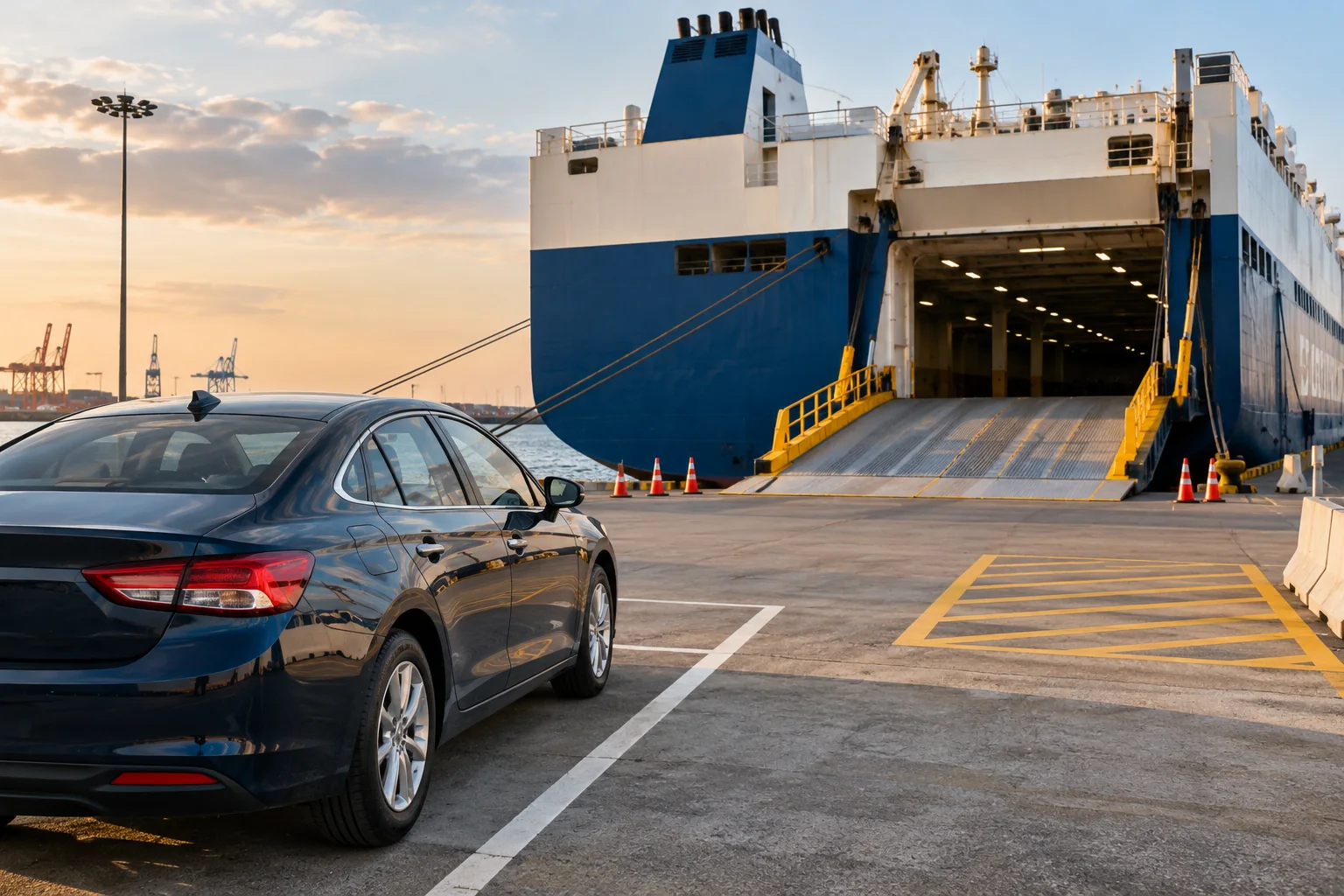
Understand what roll-on/roll-off describes
Roll-on/roll-off, often shortened to RoRo, describes cargo moving on and off a vessel using wheeled access rather than being lifted aboard as an individual container. For a private car, the practical arrangement commonly involves terminal personnel moving the vehicle into the vessel and later through the receiving terminal. The label identifies a handling system, but it does not establish whether your particular vehicle, route, or proposed contents are accepted.
Ask the provider to identify the ocean carrier, origin port, destination port, and inland legs. Confirm whether the booking is for the vehicle as a self propelled unit or involves a separately approved handling arrangement. A passenger ferry, an industrial vehicle carrier, and a personal vehicle freight service can have different booking processes. Do not assume you can accompany the car or access it during the voyage because it rolls aboard.
The international shipping guide explains the other tasks surrounding the ocean leg. Export clearance, destination admissibility, customs release, and local registration remain separate requirements. A sailing schedule is useful only after the vehicle qualifies for the route and the parties know who will complete each task. Start with that whole journey rather than choosing a vessel service based on a departure date alone.
Confirm acceptance for the actual vehicle
Provide the vehicle's year, make, model, dimensions, propulsion type, and current operating condition. Disclose modifications, collision damage, warning lights, leaks, missing parts, and any issue affecting starting, steering, braking, or movement. The carrier needs a truthful description before confirming acceptance. A car that starts once in your driveway may still have a defect that makes terminal handling unreliable.
Wallenius Wilhelmsen's used unit receiving instructions illustrate the specificity of operator rules, including restrictions related to personal effects, leaks, tires, steering, and braking. These are that operator's instructions, not a universal acceptance policy for every vessel. Ask your own provider for the current rules applicable to the actual booking and get unusual conditions reviewed before delivering the car.
The non-running vehicle guide helps describe functional limits accurately. Do not presume that a car accepted for inland hauling can be accepted on a RoRo vessel in the same condition. If repairs are required, finish them and provide any requested evidence before the terminal appointment. A late rejection can create storage, return transport, or missed sailing costs that a complete initial description could have avoided.
Check propulsion rules close to booking
Electric, plug-in hybrid, conventional hybrid, gas fueled, and other alternative fuel vehicles can face distinct carrier requirements. Ask whether the exact vehicle category is accepted on the intended route, which documents are needed, and what preparation applies. Do not follow an old battery charge percentage from a generic article when the operator's current acceptance position may have changed. Obtain instructions tied to your booking.
For example, Wallenius Wilhelmsen publishes separate instructions for used alternative fuel vehicles. The page distinguishes vehicle categories and includes a current restriction on used battery electric vehicle loading. That is a specific operator policy that must be checked before committing to its service, rather than evidence that all ocean carriers apply the same restriction.
Disclose battery damage, collision history affecting the propulsion system, and relevant faults through the provider's requested process. Ask about diagnostic evidence or other documents if required. The vehicle type guide explains why manufacturer instructions and carrier acceptance both matter. Manufacturer handling guidance can help people operate the car correctly; it does not compel an ocean carrier to accept a vehicle outside its current cargo policy.
Know who can make the ocean booking
Some industrial ocean carriers work through freight forwarders rather than directly with private individuals. Wallenius Wilhelmsen's private vehicle guidance, for example, directs private shippers to a freight forwarder and states that it does not take their bookings directly. Treat that as the named carrier's booking arrangement. Confirm the appropriate channel for whichever ocean service you are considering.
Identify the forwarder's legal name, its role, and the party that will issue the transport document. In relevant United States ocean trade, the Federal Maritime Commission's OTI list helps check applicable intermediary status. Match the company in the booking agreement to the record and confirm the destination agent's identity. A forwarder can coordinate several stages, but the agreement should show what is included and which tasks remain yours.
Ask who handles inland collection, terminal appointments, export information, cargo insurance, destination notices, and claims support. Keep the answers with the booking confirmation. If different businesses perform these functions, obtain their contact details and escalation process. Clear role definitions prevent a release problem from moving between offices while the vehicle remains at a terminal and time related charges continue under the applicable terms.
Prepare the car for terminal inspection
Follow the carrier's written preparation instructions for cleanliness, fuel or charge state, keys, alarms, and permitted equipment. Cleanliness serves more than appearance: dirt can obscure condition and may create destination biosecurity concerns. Ask whether the vehicle needs particular attention underneath or in storage areas. Do not add chemicals, treatments, or modifications without understanding the relevant requirements and manufacturer guidance.
Photograph the vehicle before it leaves your custody and record existing visible defects, odometer, operating condition, and the keys provided. If an inland carrier takes it to the port, obtain that handoff record too. The terminal may conduct its own inspection after the inland journey. Preserve both records so a later concern can be compared with the correct stage rather than one photograph taken weeks before departure.
Keep the operating key accessible according to the service instructions. If the car requires unusual steps to start or disable an alarm, provide concise instructions approved by the responsible operator. Avoid including passwords or sensitive personal information unnecessarily. The document and handoff guide helps organize these records. Terminal staff need a car they can identify and handle under the accepted plan, while you need evidence of the condition in which it was presented.
Remove unapproved belongings and equipment
A car carrier vessel is not automatically a household goods service. Confirm which items may remain with the vehicle, including standard accessories, spare equipment, and removable components. Empty personal storage spaces unless the actual operator expressly allows the contents. A road carrier's permission to carry a bag to the port does not establish ocean carrier acceptance or destination customs clearance for that bag.
Wallenius Wilhelmsen's prohibited item guidance identifies personal effects and several other categories it does not accept in used units. Its rules are an operator example, with separate guidance for particular cargo categories. Check the instructions for your own shipment and do not assume a motorhome exception applies to an ordinary passenger car.
The personal items guide separates acceptance from coverage, weight, and customs declarations. If you need to move belongings, arrange a service that explicitly accepts them. Remove essential documents, medicines, valuables, and anything you will need while the car is inaccessible. A terminal is a poor place to discover an overlooked object that requires unpacking, additional declarations, or a separate storage arrangement before the vehicle can proceed.
Complete export and import work before departure
For a United States used vehicle export, review CBP's motor vehicle export guidance and the procedures of the port handling the shipment. Ownership documentation, vehicle identification, and presentation timing depend on the applicable circumstances and transport method. Ask the forwarder which steps it handles and obtain confirmation of information you must supply. A firm vessel booking does not replace customs compliance.
At destination, establish admissibility before the car sails. Contact the relevant authority or qualified local customs professional about import permission, taxes, safety or emissions requirements, and any restrictions associated with age or vehicle specification. Customs release and registration are separate events. A car may leave the terminal legally under an arranged movement without yet being approved for ordinary road use.
Keep original documents where the confirmed process requires them and retain accessible copies. Ask how a lien, lease, recent dealer purchase, or ownership change affects the document package. The dealership purchase guide discusses coordination when a seller controls release. Do not allow the title processing schedule, inland pickup schedule, and ocean cutoff to develop independently. They need to agree before the vehicle is sent to a port where correcting missing paperwork can become difficult.
Read the ocean terms and insurance separately
An ocean freight agreement should identify the accepted cargo, ports, service scope, transport document, payment terms, and relevant conditions. Read the provisions about liability, exclusions, notice requirements, storage, and changes to the route or sailing. If a forwarder presents a package, identify the underlying carrier terms as well. Do not assume a single invoice makes every participant responsible for the same events.
Carrier liability may differ from the vehicle's full value and from a separate marine cargo insurance policy. Wallenius Wilhelmsen's private vehicle guidance recommends considering marine insurance because carrier liability may be limited. Ask your provider or insurance professional which stages and risks the proposed policy covers, how the car is valued, what deductibles apply, and how pre-existing or mechanical damage is treated. Obtain the terms rather than relying on a general assurance that the shipment is insured.
The international cost guide helps include inland movement, terminal charges, documentation, local handling, and storage exposure alongside ocean freight. Ask when time related charges can begin and who is able to stop the clock by completing release tasks. A lower freight amount can represent a narrower service scope, so compare the whole route and receiving arrangement before deciding.
Track availability rather than only vessel movement
A vessel schedule helps you plan, but the car's collection date depends on more than arrival at the port. Unloading, terminal processing, customs release, payment, and appointment availability can all remain outstanding. Ask the destination agent which notice confirms the car is actually available and what documents the collector must bring. Keep provisional travel arrangements flexible until that notice is issued.
Provide a destination contact who can respond in the local time zone. If someone else will collect, prepare the required authorization and identification in advance. Confirm whether they can drive the car away lawfully or need a local transporter. Arrange appropriate insurance, registration permissions, or storage for the next stage. Possession of a release notice does not itself establish permission to use public roads.
Ask what happens if the car does not start after arrival. The response should fit the terminal's procedures and the vehicle manufacturer's handling instructions. Do not assume a friend can enter a restricted terminal with improvised recovery equipment. A planned local carrier or approved service provider may be needed. The vehicle handling guide provides questions for arranging that next movement without turning the collection appointment into an unplanned repair operation.
Inspect and close the destination handoff
Compare the vehicle with the available origin and terminal records as soon as the receiving process allows. Photograph visible concerns and record them through the prescribed delivery and claim procedures. Note the date, location, lighting, and people present. Keep copies of the release documents, receipts, and condition report. If the car was handled by a destination agent before your inspection, obtain its records too.
Follow the relevant notice requirements promptly if you identify a problem. Keep the transport claim distinct from destination registration or maintenance tasks, while preserving evidence needed to explain the issue. Confirm all approved charges and the final location of the vehicle. A completed RoRo shipment leaves a clear trail from origin acceptance through ocean carriage to authorized collection, with any remaining local compliance work assigned to the right person.
Keep the contingency plan specific
Agree on what happens if the vehicle misses its intended sailing or the destination receiver cannot attend the available collection date. Identify who authorizes storage, who can arrange another inland movement, and how additional costs will be approved. A general instruction to resolve delays may leave the agent uncertain about what it can spend on your behalf.
Keep a backup contact and enough accessible funds for charges that are your responsibility under the agreement. This does not mean accepting an unexplained payment request. Verify a changed bank account or unexpected invoice through a known contact before acting. The useful contingency plan makes ordinary decisions possible while preserving checks on identity and scope.
Update your own travel and onward transport when the confirmed schedule changes. If registration work cannot start until documents arrive, allow time for that step after the vehicle is released. Treat the port collection as one event within the relocation rather than the date on which every local task must be complete.
Sources and further reading
Dates and the scope of individual rules are explained in the guide. Use the linked authority or operator to confirm requirements for your shipment.